Why Is My Dog Suddenly Barking at Night?
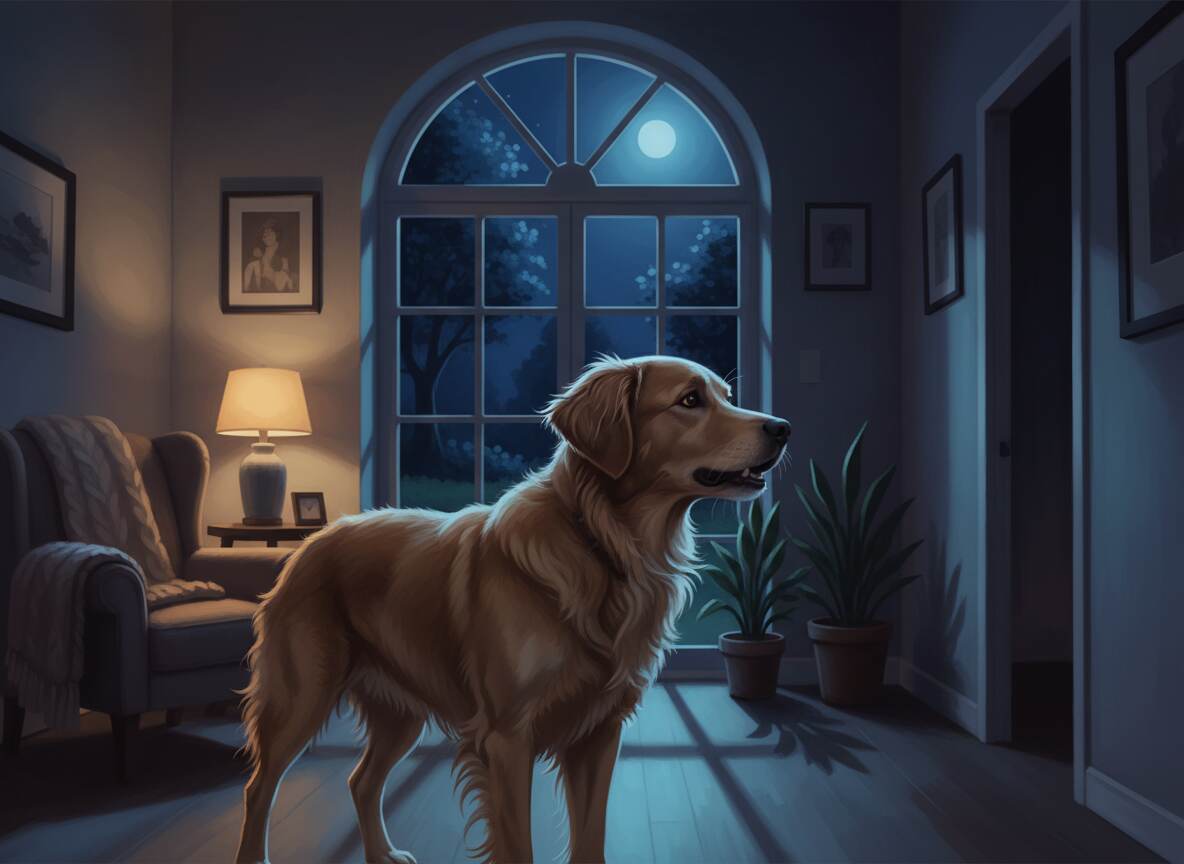
If your dog has suddenly started barking at night, it can feel frustrating, confusing, and honestly a little unsettling. A dog who used to settle down quietly may now bark at the window, cry out in another room, react to sounds you cannot hear, or wake the whole house for reasons that are not obvious. When it happens out of nowhere, most owners start asking the same question: why is my dog suddenly barking at night, and should I be worried?
The short answer is that nighttime barking usually has a reason. Dogs do not typically start barking in the middle of the night for no cause at all. Sometimes the reason is environmental, like outside noises, wildlife, or unfamiliar activity. Sometimes it is emotional, like stress, fear, or separation-related anxiety. Sometimes it is physical, especially in older dogs or dogs who are uncomfortable, restless, or unwell. The barking itself is a symptom. The real question is what is driving it.
That is why the word suddenly matters so much. A dog who has always been a light sleeper or a nighttime barker is one thing. A dog who used to sleep peacefully and now starts barking after dark is telling you that something has changed, either in their environment, their routine, or their body.
Dogs notice things at night that humans often miss
One of the simplest explanations is also one of the most common: your dog is hearing, seeing, or smelling something at night that you are not noticing. Dogs have much sharper senses than we do. A fox moving outside, a cat crossing the garden, a neighbor coming home late, a delivery van, wind against the fence, footsteps in the hallway of an apartment building, or even a change in the usual nighttime sounds can all trigger barking.
At night, those sounds can feel bigger to dogs because the environment is quieter. There is less daytime activity to drown things out, so even small noises may stand out more. A dog who seems to be barking at nothing may actually be reacting to something very real from their point of view.
If the barking is directed toward a window, door, fence line, or a certain part of the house, outside triggers should be high on your list.
Your dog may be reacting to wildlife or neighborhood activity
A lot of nighttime barking comes down to what is happening outdoors. Wildlife is often more active after dark, and even in suburban areas dogs may hear or smell foxes, cats, hedgehogs, raccoons, possums, rodents, or other animals moving nearby. In some homes, the dog is reacting to people walking past, car doors shutting, neighbors returning late, or activity in shared hallways.
This is especially likely if your dog seems alert rather than distressed. They may run to the same spot, stare outside, bark in short bursts, and then settle again. In those cases, the issue may be less about anxiety and more about your dog acting as a nighttime alarm system.
Fear can make nighttime barking worse
Night can feel different to dogs, especially sensitive ones. Shadows change. Sounds carry differently. Familiar rooms may feel less familiar in the dark. If your dog is already a little nervous, nighttime can make that more obvious. A dog who is uneasy after dark may bark because they feel uncertain, startled, or on edge.
This can happen after a stressful event too. Thunderstorms, fireworks, visitors, travel, a bad interaction with another dog, or a frightening noise can leave a dog more reactive at night afterward. In those cases, barking may be part of a broader fear response.
A fearful dog may not just bark. They may also pace, pant, cling to you, refuse to settle, tremble, or seem hyper-aware of every little sound.
Changes in routine can trigger nighttime barking
Dogs are often more routine-driven than people realize. If your schedule has changed, if someone in the home is away, if bedtime has shifted, if walks are happening at different times, or if your dog is getting less exercise or stimulation during the day, nighttime behavior can change too.
A dog who is under-exercised, overtired, or unsettled by a new routine may have a harder time settling at night. Barking can become part of that restlessness. This is especially common if the dog has more pent-up energy than usual or if their day has become less predictable.
Sometimes the barking is not really about the night itself. It is the result of what did or did not happen earlier in the day.
Boredom and under-stimulation can play a role
If your dog is not getting enough mental and physical stimulation, nighttime may be when that starts to show. A bored dog may become more reactive to little sounds, more likely to patrol the house, and more likely to bark because they are not fully settled. Dogs who sleep much of the day without enough enrichment can end up more alert at night than owners expect.
This does not mean every barking dog is bored, but it can be part of the picture, especially in younger dogs, working breeds, and dogs who need more structured activity than they are currently getting.
Separation-related stress can show up after dark
Some dogs bark at night because they do not like being separated from their people. This may happen if your dog sleeps in another room, is newly crated at night, or has become more attached recently. A dog who barks once the house goes quiet may be reacting to isolation, uncertainty, or the loss of access to you.
This is more likely if the barking happens when doors close, when lights go out, or when your dog realizes everyone has settled in another room. Dogs with separation-related issues may also whine, scratch at doors, pace, or become distressed when left alone during the day.
If nighttime barking seems tied to being apart from you rather than reacting to outside sounds, emotional dependence may be part of the cause.
Pain or discomfort can make dogs bark at night
This is one of the most important things not to overlook. Dogs who are uncomfortable may bark more at night because pain often feels worse when everything else is quiet and still. A dog with arthritis, digestive discomfort, injury, dental pain, urinary discomfort, or another physical issue may struggle to settle and may vocalize because they feel restless or distressed.
Older dogs in particular may bark more at night if lying down is uncomfortable, getting up is difficult, or they are dealing with stiffness after resting. A dog who seems fine during the day but barks, paces, or changes sleeping positions repeatedly at night may be telling you they are not comfortable.
This is especially important if the barking is new and comes with other signs like limping, slower movement, panting, licking, restlessness, appetite changes, or reluctance to jump or climb stairs.
Senior dogs may bark at night because of cognitive changes
If your dog is older, sudden nighttime barking should always make you think about age-related changes. Senior dogs can develop cognitive dysfunction, which is similar in some ways to dementia in humans. One common sign is nighttime confusion. A dog may wake up disoriented, wander the house, bark for no clear reason, stare into space, or seem unsure where they are.
Vision and hearing changes can also make older dogs feel less secure after dark. A senior dog who cannot see or hear as well may become more startled, more anxious, or more dependent on familiar routines and reassurance.
Nighttime barking in an older dog is not something to shrug off as “just old age.” It may be common, but it still deserves attention.
Medical issues can sometimes be the real cause
Beyond pain and aging, other medical issues can affect nighttime behavior too. Dogs who are nauseated, need to urinate more often, feel thirsty, have hormonal changes, or are generally unwell may become more restless and vocal at night. Sometimes barking is not the main problem. It is just one of the ways discomfort shows up.
If your dog’s nighttime barking is paired with increased thirst, accidents in the house, vomiting, diarrhea, appetite changes, weight loss, confusion, or any other unusual behavior, it is worth speaking to your vet sooner rather than later.
Territorial behavior may be stronger at night
Some dogs are naturally more alert to guarding their space after dark. They may bark at noises near the house, movement outside, or anything that feels unusual in their environment. This can become more intense if they spend a lot of time watching out of windows or if they have a strong guarding tendency to begin with.
A territorial dog may not be frightened. They may feel like they are doing their job. That does not make the barking less disruptive, but it does change how you approach it. A dog who is alarm barking at real triggers needs a different solution than a dog who is barking from anxiety or pain.
When nighttime barking is probably less serious
Nighttime barking is often less worrying when your dog otherwise seems healthy, relaxed, and like themselves. If the barking is clearly linked to outside sounds, a temporary routine disruption, or a specific trigger, and your dog settles fairly easily afterward, the cause may be more environmental than medical.
A younger dog who barks at foxes in the garden or reacts to late-night hallway noise may not be in distress. They may simply be alert and responsive to their surroundings.
That said, even harmless barking can become a habit if it keeps getting reinforced or if the triggers remain constant.
When you should worry more
It is time to worry more if the barking is sudden, persistent, intense, or paired with other changes. Red flags include:
- pacing
- panting
- trembling
- clinginess
- confusion
- staring into space
- loss of appetite
- vomiting
- diarrhea
- limping or stiffness
- whining
- accidents in the house
- major sleep disruption
- a big behavior change in a senior dog
If your dog seems distressed rather than simply alert, or if the barking feels like part of a bigger shift in behavior, it is important to look deeper.
What to do at home
Start by trying to identify the pattern. Where is your dog barking? What time does it happen? Do they seem to be reacting to something outside, or do they seem restless and unsettled in general? Does it happen only when separated from you, or even when you are nearby? The more specific you can get, the easier it becomes to narrow down the cause.
If outside triggers seem likely, closing curtains, using white noise, limiting window access at night, or changing where your dog sleeps can help. If routine and stimulation seem to be part of the issue, make sure your dog is getting enough exercise, sniffing, enrichment, and a calm wind-down before bed.
If your dog seems fearful, focus on reassurance and predictability rather than punishment. If they seem physically uncomfortable, do not assume it will pass on its own. And if your dog is older and suddenly barking at night, a vet check is a very sensible next step.
What not to do
Try not to punish nighttime barking without understanding why it is happening. If your dog is reacting to fear, discomfort, confusion, or real outside triggers, punishment can increase stress and make the problem worse. It may stop the noise in the moment, but it does not address the cause.
It is also not a good idea to assume your dog is barking “for attention” unless you have ruled out the other possibilities. Sudden nighttime behavior changes deserve a little more respect than that.
Final thoughts
If your dog is suddenly barking at night, there is usually a reason behind it. Outside noises, wildlife, fear, routine changes, boredom, separation-related stress, pain, aging, and medical issues can all play a role. The barking itself is not the full story. It is a clue.
The most helpful thing you can do is look at the full picture: your dog’s age, health, routine, environment, and body language. A dog who is simply reacting to nighttime sounds needs a different kind of help than a dog who is confused, uncomfortable, or anxious.
So while nighttime barking can absolutely be frustrating, it is also information. And when a dog suddenly changes their behavior after dark, it is worth listening closely to what that change might be trying to tell you.