Why Is My Cat Suddenly Hiding?
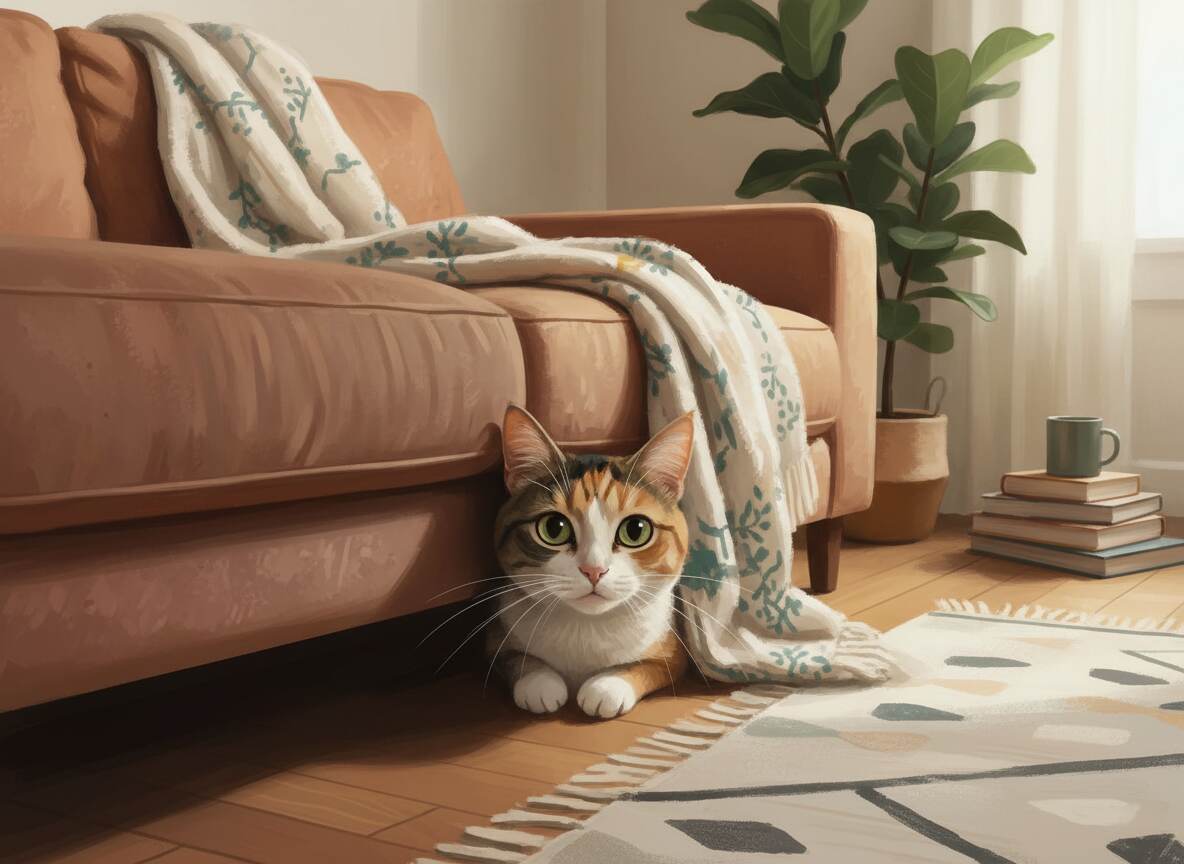
If your cat has suddenly started disappearing under the bed, staying behind the sofa, avoiding their usual spots, or spending more time tucked away in closets and corners, it can feel worrying fast. Cats do hide sometimes by nature, but a sudden change in hiding behavior usually means something has shifted. Sometimes the reason is simple and temporary. Other times, it can be a sign that your cat is stressed, frightened, overwhelmed, or not feeling well.
Hiding is normal for cats, but sudden hiding is different
Cats are wired to seek out safe, enclosed spaces. A cardboard box, a quiet shelf, the back of a wardrobe, or the space under a bed can all feel secure to them. Hiding helps cats rest, regulate stress, and observe the world without feeling exposed. That part is normal.
What matters is the change. If your cat has always liked quiet corners, that is one thing. If they were usually social, visible, and relaxed and now they are suddenly hard to find, that deserves attention. A sudden shift in behavior is often your biggest clue that something is going on.
Stress is one of the most common reasons
Cats are sensitive to changes that people sometimes barely notice. A new pet, a visitor, a baby, loud cleaning, furniture being moved, unfamiliar smells, construction noise, travel, or even a change in your work schedule can be enough to unsettle them. Some cats react by becoming clingy. Others retreat.
When a cat feels unsure, hiding can be a coping strategy. It gives them control, distance, and a chance to calm down. In many cases, a stressed cat is not trying to be difficult or dramatic. They are trying to feel safe again.
New environments can trigger hiding
If you recently moved house, adopted your cat, rearranged rooms, or brought them back from the vet or groomer, hiding can be part of the adjustment period. Cats rely heavily on familiarity. A new environment can make even a confident cat act withdrawn for a while.
Some cats settle within hours. Others need days or even a few weeks before they feel comfortable moving around openly again. The more change there has been, the more likely hiding is part of that transition.
Illness or pain should always be considered
One of the most important things to know is that cats often hide when they are sick or in pain. This is an instinctive behavior. In the wild, showing weakness could make an animal vulnerable, so many cats become quieter and more withdrawn when something feels wrong.
That means sudden hiding should never be brushed off too quickly, especially if it comes with other changes. If your cat is also eating less, moving differently, sleeping more, grooming less, vocalizing unusually, avoiding touch, or having litter box issues, a medical problem becomes more likely.
Pain can make even affectionate cats disappear
Cats dealing with dental pain, arthritis, injuries, stomach upset, urinary discomfort, or other internal issues may start hiding simply because they do not feel good. Some cats become irritable. Others become very still and quiet. A cat who normally greets you at the door but now stays hidden may not be moody. They may be uncomfortable.
This is one reason sudden hiding deserves a closer look. Cats are very good at masking pain until they really cannot anymore.
Fear after a specific event can cause sudden withdrawal
Sometimes there is a clear trigger. A loud bang, being stepped on accidentally, a negative interaction with another pet, a fall, fireworks, a stranger in the house, or a stressful vet visit can all leave a cat feeling shaken. Even if the event seems minor to you, your cat may need time to recover.
In these cases, hiding may be a short-term fear response. If your cat is otherwise eating, drinking, and slowly reappearing, they may simply need quiet time and reassurance.
Conflict with other pets is easy to miss
If you have more than one pet, tension in the home can be a major reason for hiding. Cats do not always fight in obvious ways. Sometimes the problem is subtle staring, blocking hallways, guarding litter boxes, chasing, or one pet making another feel unable to move around comfortably.
A cat who suddenly starts hiding may not be antisocial. They may be avoiding conflict. Multi-pet stress is often overlooked because the signs can be quiet and indirect.
Changes in routine can affect sensitive cats
Cats often feel safest when life is predictable. If you have been away more, sleeping at different times, feeding later than usual, hosting guests, or changing the household rhythm, your cat may react by withdrawing. This is especially true for anxious or routine-loving cats.
Even positive changes can feel disruptive from a cat's point of view. Their world works best when it feels stable and familiar.
Senior cats may hide for different reasons
Older cats can become more withdrawn because of pain, sensory decline, confusion, or age-related illness. A senior cat who suddenly hides more may be dealing with arthritis, cognitive changes, vision problems, hearing loss, or another health issue that makes open spaces feel less comfortable.
If your cat is older, sudden hiding should be taken especially seriously. Age changes can be subtle at first, and behavior shifts are often one of the earliest signs.
Sometimes the hiding spot itself gives you clues
Where your cat hides can tell you a lot. If they choose dark, enclosed, low spaces, they may be seeking safety. If they hide near a radiator or warm area, they may be trying to soothe discomfort. If they stay close but out of sight, they may still want connection while feeling unsure. If they hide near a litter box or avoid jumping to usual spots, pain may be part of the picture.
The pattern matters just as much as the hiding itself.
When should you worry?
It is time to worry more if the hiding is sudden, persistent, or paired with other symptoms. A cat who skips meals, stops drinking, strains in the litter box, vomits repeatedly, breathes oddly, seems weak, cries out, or will not come out at all needs prompt attention. Cats can go downhill quickly, especially if they stop eating.
Even without dramatic symptoms, a cat who stays hidden for more than a day or two and seems unlike themselves is worth checking in on with a vet. You know your cat's normal best. If something feels off, trust that instinct.
What you should do at home
Start by making things feel calm and safe. Do not drag your cat out of hiding unless there is an emergency. Forced handling can make fear worse. Instead, keep the environment quiet, offer food and water nearby, make sure the litter box is easy to access, and let your cat come out on their own terms.
You can sit nearby, speak softly, and keep your routine steady. Some cats respond well to a dim, quiet room with familiar bedding and no pressure. If stress is the cause, gentle predictability often helps more than constant coaxing.
Watch for small signs of improvement or decline
Look at the full picture: appetite, water intake, litter box use, posture, grooming, movement, and willingness to engage. A cat who is still eating, using the litter box, and slowly becoming more visible may just need time. A cat who is hiding and also shutting down in other ways needs faster action.
Behavior changes rarely happen in isolation. The more clues you notice, the easier it is to judge whether this seems emotional, environmental, or medical.
Final thoughts
If your cat is suddenly hiding, there is usually a reason, even if it is not obvious right away. Stress, fear, routine changes, pain, illness, and conflict with other pets can all cause a cat to retreat. Sometimes the answer is temporary and manageable. Sometimes it is your cat's quiet way of telling you they need help.
The most important thing is not to dismiss the change. Cats are subtle, and hiding is one of the clearest ways they show that something does not feel right. A little patience, careful observation, and a vet visit when needed can go a long way toward helping your cat feel safe again.