Why Does My Dog Sleep on Me?
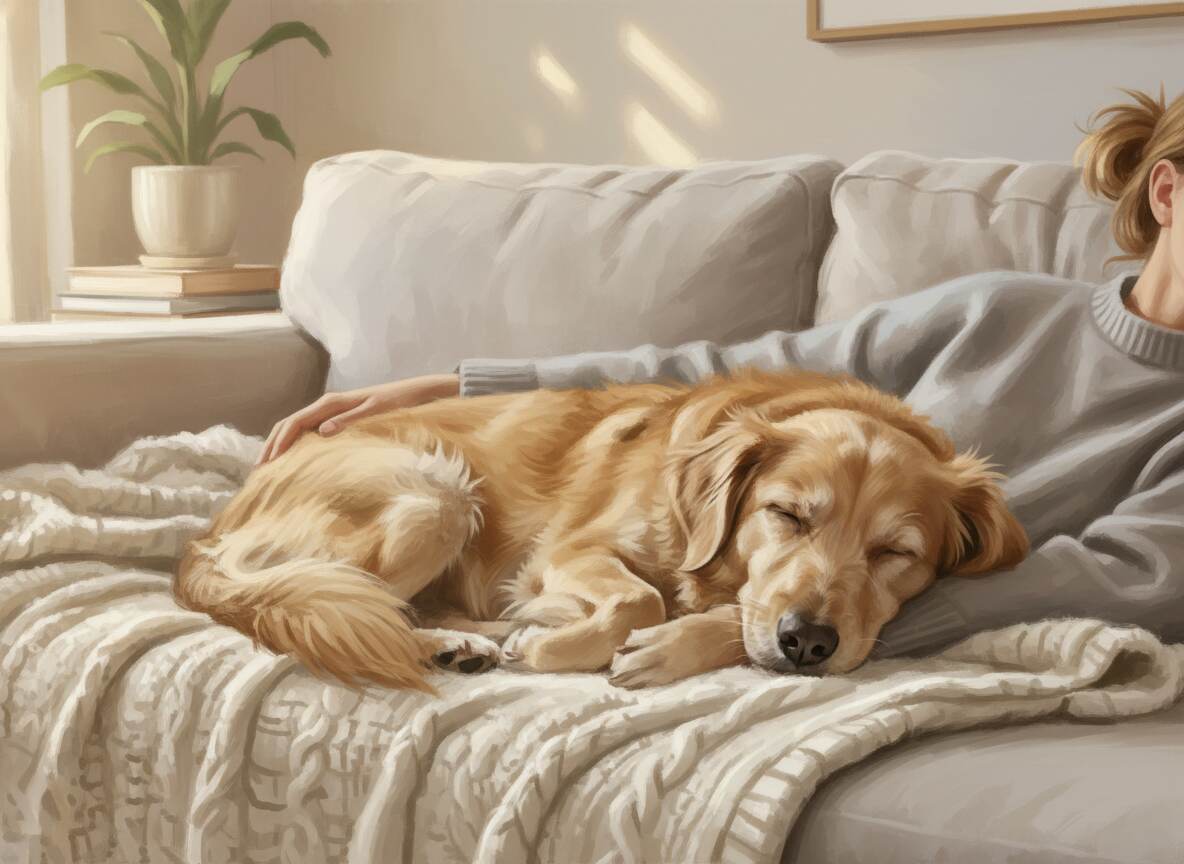
If your dog always seems determined to nap on your legs, curl up against your chest, drape themselves across your lap, or press their whole body into you at bedtime, you are definitely not the only one wondering why. For some owners, it feels sweet and comforting. For others, it is adorable for about five minutes and then suddenly very heavy. Either way, it is one of those dog behaviors that feels deeply personal. When a dog chooses to sleep on you, it can seem like it must mean something important.
And in many cases, it does.
Dogs sleep on people for a mix of emotional, practical, and instinctive reasons. Sometimes it is about affection and attachment. Sometimes it is about warmth, comfort, routine, or feeling safe. Sometimes it is simply because your dog has discovered that you are softer than the floor and less likely to move than the rest of the household. The behavior is often completely normal, but context still matters. A dog who has always loved sleeping on you is different from a dog who suddenly becomes unusually clingy, needy, or unable to settle without physical contact.
The most helpful way to understand this behavior is to look at the full picture. Your dog may be sleeping on you because they love you, because they feel secure with you, because they want something, or because something in their world has changed.
Affection is one of the most common reasons
Very often, the simplest explanation is the right one. Your dog sleeps on you because they feel close to you. Dogs are social animals, and many of them seek physical closeness with the people they trust most. Sleeping is a vulnerable activity, so where a dog chooses to rest can say a lot about where they feel safest and most comfortable.
If your dog regularly curls up on you when they are relaxed, sleepy, and content, it often reflects bonding. They are not just near you by accident. They are choosing contact. For many dogs, that contact is soothing. Your scent, body heat, breathing, and presence can all make rest feel more secure.
This is especially common in dogs who are strongly attached to one person in the household.
Your dog may feel safest when touching you
Dogs often like to sleep where they feel protected. Being physically close to you can give your dog a sense of safety, especially if they are naturally sensitive, a little anxious, or highly bonded. Some dogs sleep on their owners because contact helps them relax. It can work almost like an anchor. If you are there, things feel okay.
This does not always mean a dog has serious anxiety. Some dogs are simply comfort-seekers. But if your dog seems unable to settle unless they are on top of you, follows you constantly, or becomes distressed when separated, then the behavior may be part of a bigger pattern of attachment or insecurity.
Warmth can be part of it too
Sometimes the answer is much less emotional and much more practical. You are warm. Dogs love warm, soft places, and a human body is basically a premium heated bed. Smaller dogs especially tend to seek out warmth because they lose body heat more easily, but plenty of medium and large dogs do it too.
If your dog is especially cuddly in the evening, during colder weather, or after settling down for the night, warmth may be playing a big role. This is one reason some dogs sleep on people more in winter and less in summer.
It can be a habit that became part of the routine
A lot of dog behaviors start small and then become routine. Maybe your dog climbed onto your lap as a puppy. Maybe you let them nap on you during a stressful week. Maybe they once settled on your feet and now that has become their favorite place. Dogs are creatures of habit, and once a behavior feels rewarding and familiar, they often repeat it.
If your dog has slept on you for a long time and nothing else about their behavior has changed, habit may be a big part of the explanation. It is not necessarily a sign of a problem. It may simply be your dog’s normal way of resting.
Some dogs are naturally more contact-oriented
Breed tendencies and personality can influence this a lot. Some dogs are naturally more independent and prefer to rest nearby rather than directly on top of you. Others are classic velcro dogs who want as much physical closeness as possible. Companion breeds, sensitive dogs, rescue dogs with strong attachment patterns, and dogs who were heavily socialized to close contact often lean more toward body-to-body sleeping.
Personality matters just as much as breed. Some dogs simply love touch. They want to lean, press, curl, and drape themselves over the people they love. For those dogs, sleeping on you is just an extension of how they relate to the world.
Your dog may be claiming the most comfortable spot
Sometimes dogs sleep on people because it is genuinely the best place in the room. You are soft, warm, familiar, and usually stationary once you settle. If your dog has the option of a hard floor, a plain dog bed, or your lap, they may make a very predictable choice.
This does not mean the behavior is meaningless. Comfort and bonding often overlap. But it is worth remembering that dogs do not always separate emotional comfort from physical comfort. To them, the best sleeping spot may simply be the one that feels nicest in every way.
Sleeping on you can be a sign of trust
Because sleep is vulnerable, dogs often choose resting places carefully. A dog who sleeps on you may be showing trust in a very direct way. They feel safe enough to fully relax with their body against yours. They are not guarding themselves from you. They are leaning into your presence.
That is one reason many owners experience this behavior as especially touching. It often reflects a real sense of security and connection.
Puppies often do this for comfort and regulation
Puppies are especially likely to sleep on people because they are still adjusting to being away from littermates and learning how to feel secure in a new home. Physical contact can help them settle. Your warmth, heartbeat, and scent may all be comforting in a way that reminds them they are not alone.
In puppies, this behavior is often very normal. The only thing to keep in mind is that habits formed early can become long-term routines, which is fine if you enjoy it, but less fine if your puppy is going to grow into a seventy-pound dog who still believes your chest is their bed.
A sudden increase in sleeping on you can mean something different
If your dog has always been cuddly, sleeping on you is probably just part of their personality. But if your dog has suddenly started sleeping on you much more than usual, it is worth paying attention. A sudden change in clinginess can sometimes reflect stress, fear, routine changes, insecurity, pain, or illness.
Dogs often seek extra closeness when they do not feel quite right. Some become quieter and more attached when they are anxious. Others become physically clingier when they are uncomfortable or unwell. If your dog is suddenly glued to you and also acting differently in other ways, the behavior may be giving you information.
Anxiety and stress can increase contact-seeking
A stressed dog may sleep on you because being close helps them regulate. Changes in the home, loud noises, travel, visitors, a new pet, a move, or changes in your schedule can all make a dog more contact-seeking. If your dog seems more attached than usual after a disruption, sleeping on you may be their way of coping.
This is especially likely if the behavior appears alongside pacing, following you everywhere, whining, restlessness, or difficulty settling alone.
Pain or illness can sometimes play a role
This is not the first explanation most people think of, but it does matter. Some dogs become more clingy when they are in pain or not feeling well. They may seek physical closeness because they feel vulnerable, tired, or in need of comfort. A dog who suddenly insists on sleeping on you and also seems quieter, less playful, less hungry, stiff, or unlike themselves should be watched carefully.
Pain does not always make dogs withdraw. Sometimes it makes them seek reassurance.
Can dogs sleep on you to protect you?
Some owners wonder if sleeping on them is a protective behavior. In some cases, maybe a little. Dogs do sometimes position themselves close to the people they care about, and some naturally alert or protective dogs may like staying physically connected. But most of the time, sleeping on you is more about comfort, security, warmth, and attachment than guarding.
It may feel protective because your dog wants to be close, but that does not necessarily mean they are standing watch.
Is it a dominance thing?
This is a very common worry, but in most cases, no. A dog sleeping on you is usually not trying to dominate you. That idea gets repeated a lot, but ordinary cuddling and contact-seeking are not good evidence of a dominance problem. Most dogs who sleep on their owners are doing it because it feels good, safe, and familiar.
What matters more is the overall behavior. If your dog is relaxed, affectionate, and easygoing, sleeping on you is usually just that: sleeping on you.
When it is probably completely normal
This behavior is usually normal if your dog has always liked close contact, seems relaxed while doing it, and is otherwise healthy and well-adjusted. A dog who naps on you, sleeps against your legs, or curls into your lap because they enjoy closeness is generally not showing a problem.
If anything, it often reflects a secure bond.
When you should look closer
It is worth paying more attention if the behavior is new, suddenly more intense, or paired with other changes. Red flags include:
- sudden clinginess
- restlessness
- panting
- whining
- pacing
- appetite changes
- lethargy
- hiding
- reluctance to move
- pain signs
- changes after a stressful event
- distress when not touching you
If your dog seems unable to settle without constant contact, or if the sleeping-on-you behavior is part of a broader shift in mood or health, it is worth considering stress, anxiety, or a medical issue.
What to do if you like it, and what to do if you do not
If you enjoy your dog sleeping on you and they are otherwise healthy, there is usually no reason to stop it. It is often a sweet, harmless habit. If you do not enjoy it, or if your dog is too big, too heavy, too hot, or too insistent, you can gently redirect them to a nearby bed or blanket. The key is consistency. Dogs do best when the rule is clear every time.
It also helps to make the alternative appealing. A soft bed near you, a warm blanket, or a predictable bedtime routine can make it easier for your dog to settle close by without needing to be directly on top of you.
Final thoughts
If your dog sleeps on you, the reason is usually a mix of love, comfort, trust, warmth, and habit. For many dogs, physical closeness is one of the clearest ways they express attachment. Sleeping on you can be their version of saying they feel safe, connected, and content in your presence.
At the same time, sudden changes always matter. If your dog has become much clingier than usual or seems to need constant contact, it is worth looking at the bigger picture. Stress, insecurity, pain, and illness can all change how a dog seeks comfort.
Most of the time, though, a dog sleeping on you is not a mystery or a problem. It is just one of the many very dog-like ways they choose the people they trust most and turn them into furniture with emotional meaning.