Why Does My Dog Lick Me So Much?
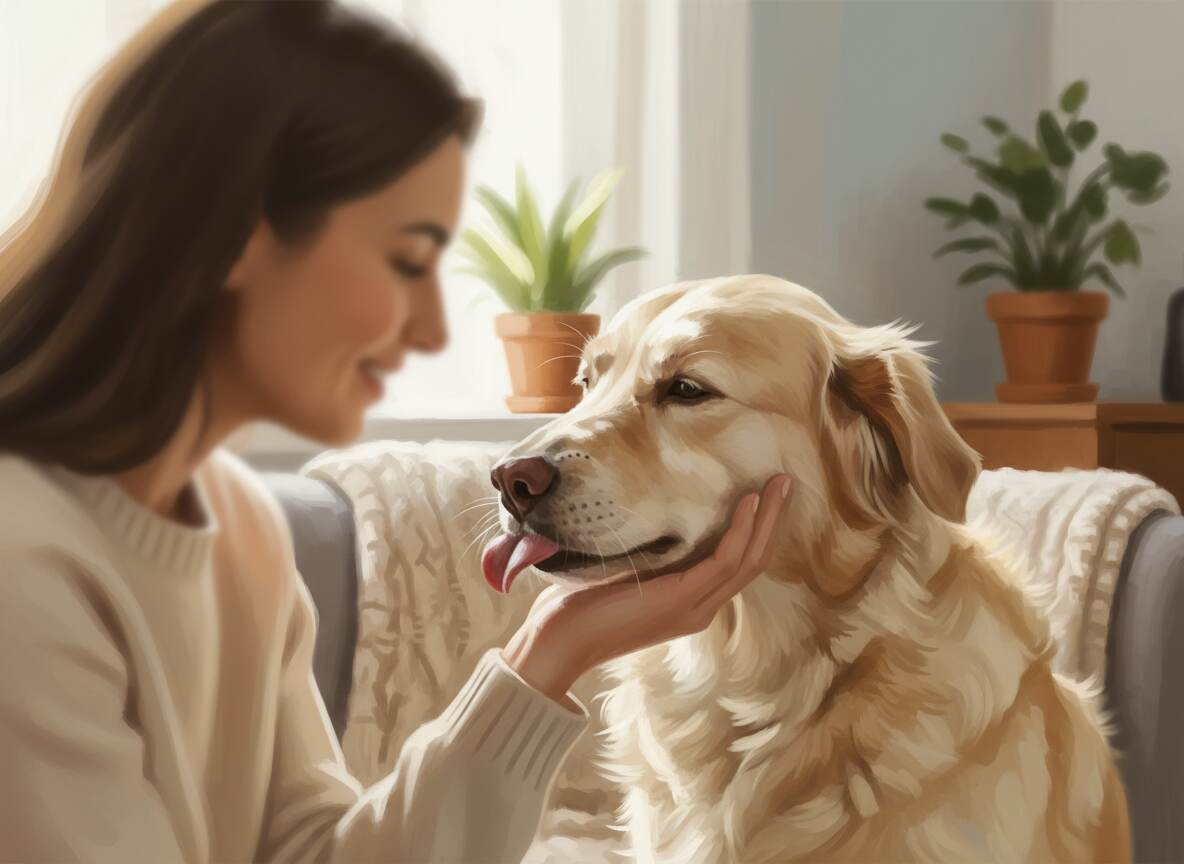
If your dog seems determined to lick your hands, your face, your arms, your feet, or basically any bit of skin they can reach, you are definitely not alone. A lot of dogs lick their owners, and while it can feel sweet, funny, or affectionate, it can also get a little confusing when it happens constantly. At some point, most dog owners start wondering the same thing: why does my dog lick me so much, and is it normal?
The short answer is that dogs lick people for a lot of different reasons. Sometimes it is affection. Sometimes it is habit. Sometimes it is attention-seeking. Sometimes it is because your skin tastes salty or interesting. And sometimes, especially when the licking becomes sudden, intense, or obsessive, it can point to stress, nausea, anxiety, or another issue that deserves a closer look.
Like a lot of dog behaviors, licking is not meaningless. Your dog is usually getting something out of it, whether that is comfort, connection, stimulation, reassurance, or a response from you. The key is understanding the context. A few happy licks during cuddle time are very different from nonstop licking that seems frantic or hard to interrupt.
Licking is a natural dog behavior
Before getting into the reasons behind it, it helps to know that licking is completely natural for dogs. Dogs use their mouths to explore the world, communicate, groom, and interact with the people and animals around them. Licking starts early in life and stays part of normal dog behavior well into adulthood.
Puppies lick their mothers and littermates. Adult dogs may lick each other socially. Many dogs also lick themselves as part of grooming or self-soothing. So when your dog licks you, the behavior itself is not strange. What matters more is how often it happens, what seems to trigger it, and whether it fits your dog’s normal personality.
Your dog may be showing affection
One of the most common reasons dogs lick people is simple affection. For many dogs, licking is part of bonding. It can be a social, friendly, familiar behavior that says, in a very dog-like way, “I know you, I trust you, and I want to interact with you.”
This is especially likely if the licking happens during relaxed, happy moments. Maybe your dog climbs onto the couch with you, leans against you, wags softly, and gives you a few licks on the hand or face. In that kind of setting, licking is often just one part of affectionate behavior.
That said, affection is not always the whole story. A lot of articles stop there, but dogs are usually more complicated than that.
Your skin tastes interesting to your dog
Sometimes the explanation is surprisingly simple. Human skin can taste salty because of sweat, or carry traces of lotion, soap, food, sunscreen, or other scents that dogs find interesting. Your dog may lick your hands after you eat, your legs after a walk, or your face after you have been outside because there is something there worth investigating.
Dogs experience the world through scent and taste far more than humans do. What seems neutral to you may be full of information to them. In some cases, licking is less about emotion and more about curiosity.
This is especially common if your dog targets certain areas, like hands, feet, or face, rather than licking you in a more general cuddly way.
Licking can be attention-seeking
Dogs are very good at learning what gets a response. If your dog licks you and you laugh, pet them, talk to them, push them away, or even just look at them, they may learn that licking is a reliable way to get your attention. From your dog’s point of view, that makes it a useful behavior.
This is one reason licking can become frequent. Even if it started as affection or curiosity, it may continue because it works. Your dog licks, and something happens. Over time, that can turn licking into a habit that shows up whenever your dog wants interaction, food, play, reassurance, or just a reaction.
Not all attention-seeking is negative. It just means your dog has learned that licking is part of how they can communicate with you.
Some dogs lick because it is soothing
Licking can also be calming. For some dogs, repetitive licking works as a self-soothing behavior. A dog who feels relaxed may lick gently during cuddle time because the rhythm itself is comforting. A dog who feels mildly stressed may also lick because it helps them regulate themselves.
This is why context matters so much. A calm dog giving a few sleepy licks while resting beside you is very different from a tense dog who seems unable to stop. The same basic behavior can come from very different emotional states.
Anxiety and stress can make licking worse
If your dog has started licking you much more than usual, stress may be part of the picture. Dogs often repeat comforting behaviors more when they are anxious, unsettled, or overstimulated. Changes in routine, moving house, loud noises, visitors, a new baby, another pet, separation stress, or tension in the home can all affect behavior.
Some dogs pace when stressed. Some pant. Some become clingy. Some lick more. And some do all of those things together.
A dog who licks excessively while also following you constantly, whining, struggling to settle, or acting unusually needy may not just be affectionate. They may be trying to soothe themselves or seek reassurance.
Licking can become a habit
Some dogs simply get into the habit of licking. What may have started as affection, curiosity, or attention-seeking can become a repeated pattern that no longer needs much of a trigger. If the behavior has been reinforced over time, it may show up automatically during certain routines, like when you sit on the couch, come home from work, or get into bed.
Habit licking is not always a problem, but it can become annoying or excessive if your dog does it constantly and cannot easily switch to something else.
Your dog may be asking for something
Sometimes licking is your dog’s way of making a request. They may want food, water, play, petting, a walk, access to a room, or help settling down. Dogs often combine licking with other signals like staring, pawing, whining, circling, or standing near something they want.
If your dog tends to lick you at the same time every day or in the same situations, it is worth asking what usually happens next. Do they want dinner? Do they want to go outside? Do they want your spot on the couch? Patterns like that can tell you a lot.
Why dogs lick faces so much
Face licking is especially common because your face is expressive, scented, and emotionally important to your dog. Dogs pay close attention to human faces. They read your mood, watch your eyes, and respond to your voice and expression. Licking the face may be part affection, part greeting, and part social interaction.
Some dogs are also drawn to the taste of skin around the mouth, especially if there are traces of food or sweat. Puppies may be especially enthusiastic about this, and some adult dogs never really grow out of it.
Of course, whether humans enjoy face licking is another matter entirely.
Why dogs lick hands and feet
Hands and feet are common licking targets because they carry strong scent information. Your hands smell like everything you have touched. Your feet may be salty, warm, and full of interesting scent cues. To your dog, these areas are not random. They are rich in information.
Dogs who lick hands may also be responding to movement and interaction. Hands pet them, feed them, throw toys, and open doors. Feet move around the house and signal activity. In other words, the body parts your dog licks most are often the ones most connected to your daily life with them.
Could your dog be licking because they feel sick?
Sometimes, yes. Excessive licking can be linked to nausea, digestive discomfort, pain, allergies, skin irritation, or other medical issues. Dogs do not always show discomfort in obvious ways. Some become restless. Some eat grass. Some drool. Some lick surfaces, themselves, or their owners more than usual.
If your dog suddenly starts licking you a lot more than normal, especially if they also seem restless, nauseated, clingy, not interested in food, or unlike themselves, it is worth considering a physical cause.
This is particularly important if the licking feels compulsive or comes with other symptoms like vomiting, diarrhea, lip licking, swallowing, pacing, scratching, or changes in appetite.
Compulsive licking can happen
In some dogs, licking crosses the line from normal behavior into something more compulsive. This is more likely when the licking is intense, repetitive, hard to interrupt, and seems disconnected from normal social interaction. A dog who licks you, the couch, the floor, or themselves over and over in a way that seems driven or frantic may be dealing with anxiety, discomfort, or a compulsive behavior pattern.
Compulsive behaviors often start with a real trigger and then grow stronger over time. The dog gets temporary relief from the action, so they repeat it more and more. This is not something to punish. It is something to take seriously and look into.
When licking is probably normal
Licking is usually normal when it is occasional, easy to interrupt, and clearly tied to affection, greeting, or routine. A dog who gives a few licks during cuddles, after you come home, or while asking for attention is often just being a dog.
If your dog otherwise seems healthy, relaxed, and like themselves, and the licking has always been part of their personality, it may simply be one of their quirks.
When you should worry more
It is worth paying closer attention if the licking is new, suddenly much more frequent, obsessive, or paired with other changes. Red flags include:
- pacing
- whining
- panting
- vomiting
- diarrhea
- loss of appetite
- excessive drooling
- licking the air or objects constantly
- overgrooming
- skin irritation
- restlessness
- sudden clinginess
- trouble settling
If the licking feels different from your dog’s normal behavior, trust that instinct. Dogs often show stress or discomfort through behavior before anything else becomes obvious.
What to do if your dog licks you too much
If the licking is mild and you do not mind it, you may not need to do much at all. But if you want to reduce it, the best approach is calm redirection. Move your hand away, stand up, offer a toy, ask for another behavior, or shift your dog into a different activity. The goal is not to punish the licking, but to stop reinforcing it and give your dog another outlet.
It also helps to look at the bigger picture. Is your dog bored? Under-exercised? Anxious? Needing more routine? Getting lots of attention for licking? Sometimes the solution is not about the licking itself, but about what is driving it.
If stress seems involved, more enrichment, predictable routines, and calmer transitions can help. If the behavior seems physical or compulsive, a vet visit is the right next step.
What not to do
Try not to yell, scold, or punish your dog for licking. If the behavior is rooted in affection, confusion, stress, or discomfort, punishment can make things worse. It may stop the behavior in the moment, but it does not solve the cause.
It is also not a good idea to assume all licking is cute and harmless. Sometimes it is. Sometimes it is not. The key is paying attention to how the behavior fits into the rest of your dog’s health and personality.
Final thoughts
If your dog licks you a lot, the reason is often a mix of affection, curiosity, habit, attention-seeking, and comfort. In many cases, it is completely normal and just part of how your dog interacts with you. Dogs use licking as a social behavior, and some simply do it more than others.
But when licking becomes sudden, intense, or hard to interrupt, it is worth looking deeper. Stress, anxiety, nausea, discomfort, and compulsive behavior can all make licking more frequent. The behavior itself is not always the problem. What matters is the context around it.
So if your dog licks you constantly, the best question is not just “How do I stop this?” It is “What is my dog getting from this behavior?” Once you answer that, the next step usually becomes a lot clearer.