Why Does My Cat Steal Hair Ties? Behavior, Risks, and What to Do
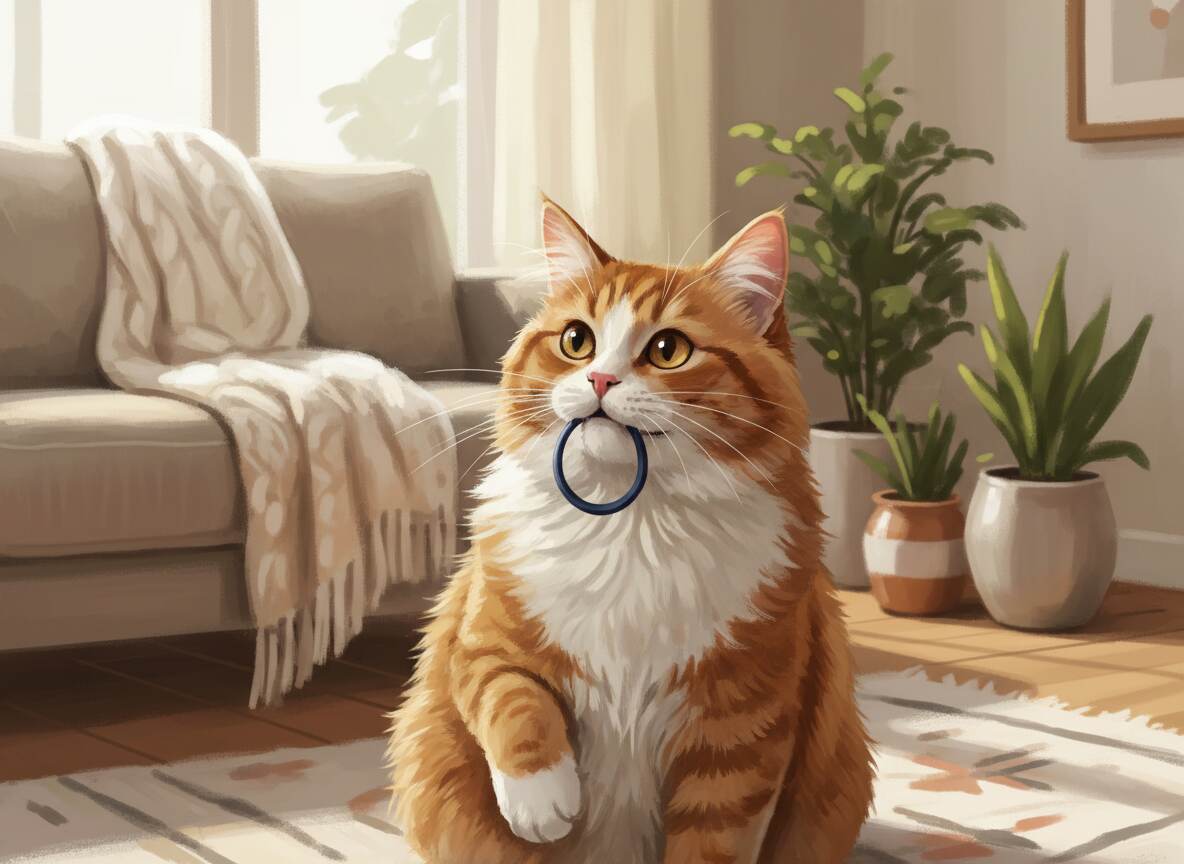
If your cat steals hair ties, you’re living with a tiny, fuzzy thief who has very specific taste. It’s one of those behaviors that’s funny until you realize you’ve bought a 30-pack and somehow you still only have two left. Then it becomes: Where are they going? and Is this dangerous?
Hair ties are a perfect storm for cats. They’re small, light, easy to carry, fun to bat, and they move in a satisfying way when a cat pounces. For some cats, they’re basically the ideal “prey” object. But hair ties also come with a real safety concern: some cats don’t just play with them, they chew and swallow them, and that can cause choking or a serious intestinal blockage.
So this topic needs both angles: the cute behavioral explanation and the safety reality check.
Why Does My Cat Steal Hair Ties (and Hide Them Under Furniture)?
First: why hair ties are so irresistible to cats
Cats are wired to hunt small, fast, unpredictable things. Hair ties check a lot of boxes:
They’re the right size to “catch.”
A cat can bite one, carry it, toss it, and re-catch it without effort.
They move like prey.
When a hair tie bounces or skitters across the floor, it mimics the movement of a bug or small animal.
They’re lightweight and portable.
Your cat can pick it up and walk away with it, which is a huge part of the reward.
They have your scent.
Hair ties often smell like you: hair, skin, shampoo, perfume, laundry detergent. Cats are drawn to familiar scents, especially if they’re bonded to you.
They’re interactive.
A hair tie is fun alone, but it’s even more fun if it makes you react. If you chase your cat, talk to them, or try to trade for it, your cat may learn that stealing hair ties is a reliable way to start a game.
The “steal and stash” behavior: why they hide them
A lot of cats don’t just steal hair ties, they stash them. Under the couch, behind the TV stand, in shoes, in corners, under rugs. This can look like a weird obsession, but it often makes sense in cat logic.
1) It’s a prey-storing instinct (kind of)
Domestic cats still have instincts that resemble wild behaviors. Some cats “cache” toys the way an animal might stash food or prey. It’s not exactly the same as a wild cat storing a meal, but the pattern is similar: I caught something valuable. I’m putting it somewhere safe.
2) Under-furniture spaces feel secure
Under beds and couches are protected, enclosed spaces. If your cat is carrying a prized object, those spaces may feel like the safest place to keep it.
3) It keeps the “prey” from escaping
A hair tie can bounce away. Under furniture, it tends to get stuck. That can be satisfying for a cat who wants to trap it.
4) It creates a private play zone
Some cats like to play where they won’t be interrupted. Under-furniture stashes become a personal toy vault.
5) It may be about avoiding competition
In multi-pet homes, cats sometimes stash toys to keep them away from other cats or dogs. Even if there’s no obvious conflict, some cats are quietly possessive.
The big question: is it just play, or is it pica?
This is the part that matters most for safety.
When it’s usually “normal play”
It’s more likely to be play if your cat:
- bats hair ties around and loses interest
- carries them briefly and drops them
- responds easily to redirection (toy, treat puzzle, wand play)
- doesn’t chew them intensely
- doesn’t show other non-food chewing/licking habits
These cats are basically treating hair ties like a favorite toy.
When it may be pica or compulsive chewing
It’s more concerning if your cat:
- chews hair ties repeatedly, especially with intensity
- tries to swallow them or bites off pieces
- eats other non-food items (plastic, fabric, string, rubber)
- seems “locked in” and hard to interrupt
- has frequent vomiting, appetite changes, or weight loss
- is a high-stress cat or has a history of anxiety habits
Pica can be behavioral, medical, or both. Some cats chew and swallow things due to stress. Others do it due to nausea, nutritional issues, or underlying illness. And sometimes the behavior starts as play and becomes a habit loop.
Why some cats prefer hair ties over actual cat toys
This is common and honestly very cat.
Hair ties are unpredictable.
Many cat toys are too predictable. Hair ties bounce in a chaotic way.
Hair ties are “forbidden.”
Forbidden objects are exciting. If you always try to take them away, you add value.
Hair ties smell like you.
A brand-new toy doesn’t smell like anything familiar.
Hair ties are easy.
Some cats don’t want a big toy. They want something tiny they can carry like prey.
The real risks: why hair ties can be dangerous
Hair ties are not just “small toys.” They’re a swallowing hazard.
1) Choking risk
A hair tie can get stuck in the mouth or throat. Some cats panic when something catches, which increases risk.
2) Intestinal blockage
If swallowed, hair ties can lodge in the stomach or intestines. This can become a medical emergency and may require surgery.
3) Linear foreign body risk (especially with elastic/stringy items)
Some hair ties are fabric-wrapped or string-like. Long, stringy objects can cause serious internal damage if swallowed.
Signs your cat may have swallowed a hair tie
Contact your vet promptly if you notice:
- repeated vomiting or retching
- refusing food or eating much less
- lethargy or hiding
- constipation or straining
- diarrhea (sometimes)
- belly pain (tense abdomen, hunched posture)
- drooling, gagging, pawing at the mouth
- sudden behavior change after a known hair tie incident
If you saw your cat swallow one, don’t wait for symptoms. Call your vet and ask what they recommend based on timing and your cat’s size and health.
Why cats steal hair ties more during certain times
If you notice phases where it gets worse, that can be a clue.
Boredom spikes
Cats often steal more when they’re under-stimulated: evenings, rainy days, days you’re busy.
Stress changes
Moves, guests, schedule changes, new pets, neighborhood cats outside: stress can increase “busy mouth” behaviors.
Attention patterns
If stealing hair ties reliably gets a reaction, it becomes a go-to strategy when your cat wants engagement.
What to do (without turning it into a daily chase game)
Step 1: management: make hair ties boring and unavailable
This is the most effective step, even though it’s not the most fun.
- store hair ties in a closed drawer or container
- don’t leave them on nightstands, bathroom counters, or desks
- check under furniture regularly (toy stash zones)
- be careful with rubber bands too, they’re a similar risk
If your cat is a dedicated thief, assume anything left out becomes cat property.
Step 2: replace the “hunt” with better prey play
If hair ties are filling a hunting need, give your cat a safer version of that experience.
A good daily routine:
- 10–15 minutes of wand-toy play (stalking, chasing, pouncing)
- let your cat “catch” the toy a few times
- end with a small meal or treat
This hunt-catch-eat rhythm reduces toy stealing in a lot of cats because it meets the instinctive need.
Step 3: offer safe carry-and-bat alternatives
Some cats specifically want small, carryable prey.
Look for:
- small plush “mice” (large enough not to swallow)
- crinkle balls that are too big to ingest
- soft kicker toys (for cats who like to bite and wrestle)
- treat puzzles for cats who steal out of boredom
If your cat loves the mouth-carry part, choose toys designed for that, not stringy items.
Step 4: don’t reward the theft with a dramatic reaction
This is hard, because it’s instinctive to chase.
But if your cat grabs a hair tie and you:
- run after them
- talk excitedly
- bargain
- laugh and engage
…your cat may learn hair tie theft is a guaranteed interaction.
Instead:
- stay calm
- gently trade for a treat or toy if needed
- remove the hair tie with minimal fuss
- then initiate play on your terms a few minutes later
You’re teaching: “Stealing doesn’t start the party. Calm behavior does.”
Step 5: if chewing is the issue, treat it as a bigger signal
If your cat is chewing hair ties intensely, don’t just swap toys. Consider:
- stress reduction (more routine, safe spaces, vertical space)
- more enrichment (puzzles, play, toy rotation)
- vet check if it’s new or escalating, especially if there’s vomiting or appetite change
Chewing non-food items can be a sign of nausea or discomfort, not just mischief.
What not to do
- Don’t use hair ties as toys “supervised.” Many cats will still swallow them quickly.
- Don’t punish your cat. It increases stress and can worsen compulsive behaviors.
- Don’t leave hair ties around and hope your cat grows out of it. Some do, many don’t.
Final thoughts
Cats steal hair ties because they’re basically perfect pretend prey: small, bouncy, carryable, and often scented like you. The hiding behavior is usually a mix of instinct, security, and private play. For many cats it’s harmless, but the safety risk is real because hair ties can be swallowed and cause serious problems.
If your cat is a hair tie thief, the best approach is simple but powerful: remove access, replace the hunting outlet with better play, and avoid reinforcing the theft with big reactions. And if chewing or swallowing is part of the pattern, treat it as a safety and health issue, not just a quirky habit.