Why Does My Cat Lick the Wall (Paint, Plaster, Concrete, or Tiles)?
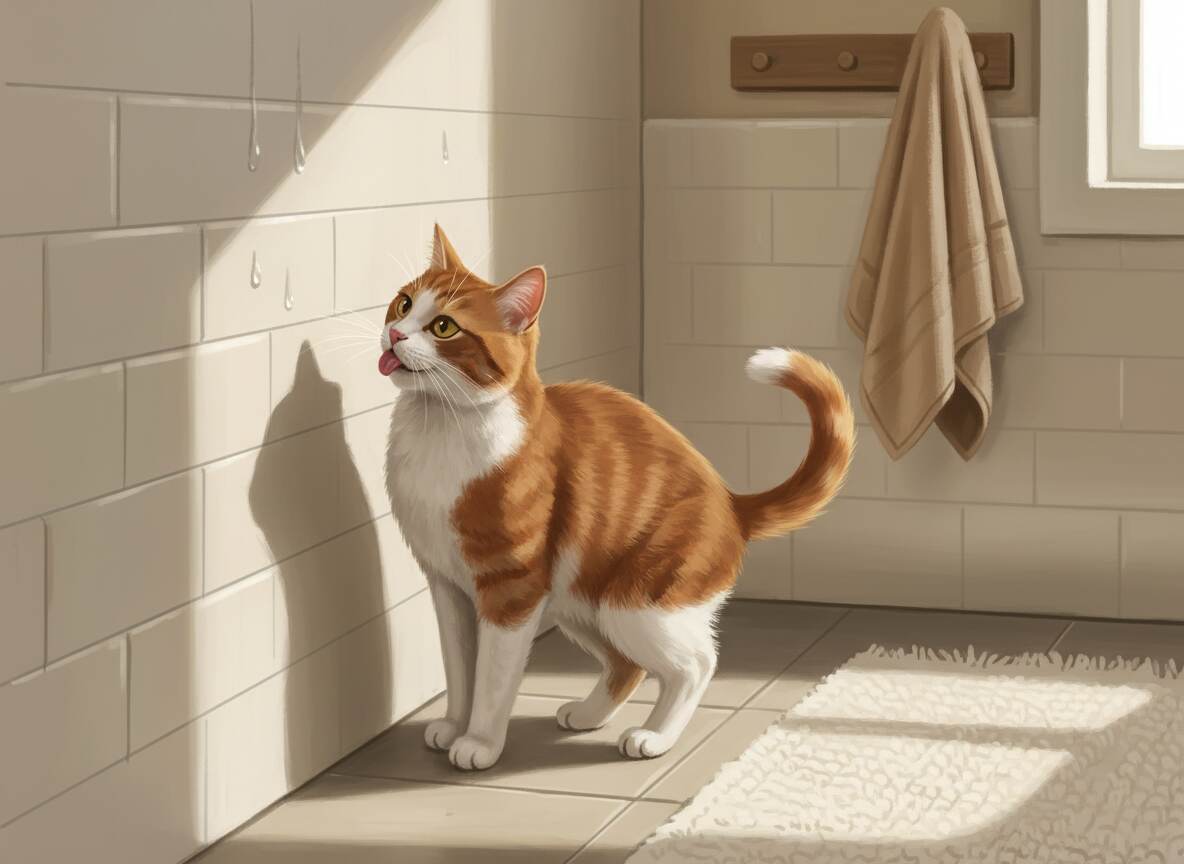
If you’ve caught your cat licking the wall, you probably had the same thought most people do: Why are you doing that? It’s such a specific, odd behavior that it can feel like it must mean something serious, especially when it happens repeatedly or your cat seems fixated on one spot.
Wall-licking can be surprisingly complicated because it can come from two big categories:
- Something about the wall is rewarding (taste, salt, condensation, texture, smells, cleaning products, grout, minerals).
- Something about your cat’s body or brain is driving it (stress, boredom, nausea, pica, dental discomfort, nutritional imbalance, or illness).
Sometimes it’s harmless and easy to solve. Sometimes it’s a clue that your cat needs help. The goal is to figure out which one you’re dealing with, then respond in a way that keeps your cat safe and doesn’t accidentally reinforce the habit.
First: licking is not the same as eating, but it can lead there
Many cats start by licking. Some escalate into chewing paint, scraping plaster, biting grout, or licking so obsessively that they irritate their tongue. The biggest risks are:
- ingesting paint, plaster, grout, or cleaning residues
- exposure to chemicals (especially cleaners, fragranced products, essential oils, disinfectants)
- pica patterns (licking/chewing non-food items more broadly)
- dental wear or mouth irritation (less common, but possible)
So even if your cat “only licks,” it’s worth taking seriously if it’s frequent.
Reason 1: salt and minerals (especially on bathroom tile)
Bathrooms are a hotspot for this behavior because tile and grout can collect tiny amounts of:
- salt residue (from human sweat, bathwater splashes, skin products)
- minerals from hard water (calcium deposits, faint mineral taste)
- condensation (moisture that makes smells and residues more noticeable)
Cats have sensitive noses and tongues. What tastes like “nothing” to you can be interesting to them. If your cat focuses on one area of tile, the edge of the tub, or the wall near the shower, this is a strong possibility.
Reason 2: condensation and water-seeking behavior
Some cats lick walls simply because they’re licking moisture. Bathrooms often have:
- damp tile after showers
- condensation on cooler surfaces
- tiny droplets around sinks and tubs
If your cat is licking right after showers or in humid weather, they may be attracted to the moisture.
Important note: If your cat seems unusually thirsty or is seeking water in odd places, that can also be a sign of a medical issue (kidney disease, diabetes, hyperthyroidism). More on that below.
Reason 3: leftover cleaning product residue
This is a big one, and it’s one of the reasons bathroom wall-licking deserves caution.
Even “pet-safe” cleaners can leave residues that smell interesting or feel stimulating to lick. Some cats are drawn to:
- bleach-like scents
- citrus or mint fragrances
- ammonia-like smells
- essential oil residues (which can be dangerous for cats)
If the licking started after you changed cleaning products, deep-cleaned the bathroom, used a new spray, or used a fragranced wipe, assume residue could be involved.
If you use essential oils in the bathroom (diffusers, sprays, concentrated cleaners), it’s worth being extra careful. Cats are much more sensitive to certain compounds than humans.
Reason 4: texture and sensory stimulation
Some cats are sensory seekers. Tile, grout, and painted walls can provide a specific “feel” on the tongue. It can be stimulating in the same way some cats lick plastic, chew cardboard, or lick fabric.
This is more likely if your cat:
- is young and energetic
- is indoors most of the time
- has other “busy mouth” habits
- does it when bored or when you’re occupied
If your cat looks calm and curious rather than distressed, sensory stimulation may be the driver.
Reason 5: boredom (your cat invented a weird hobby)
Boredom can create the strangest behaviors. If your cat doesn’t have enough enrichment, they may start doing repetitive, attention-grabbing things. Wall-licking can become:
- a self-made activity
- a way to create stimulation
- a way to get you to react
If you leap up every time your cat licks the wall, your cat may learn that wall-licking is a reliable “summon the human” button.
Reason 6: stress or anxiety (self-soothing behavior)
Repetitive licking can be calming. Some cats respond to stress by hiding, some over-groom, some become vocal, and some develop odd repetitive habits like licking walls.
Common stress triggers:
- schedule changes
- moving house
- renovations
- visitors
- new pet or baby
- conflict in multi-cat homes
- outdoor cats visible through windows
If the wall-licking increases during busy times, at night, after changes, or when your cat seems tense, stress may be part of the picture.
Reason 7: nausea or digestive discomfort
This is one of the most important “quiet” causes. Mild nausea can show up as odd licking behaviors, including licking walls, floors, plastic, or other surfaces.
You might also notice:
- lip licking
- swallowing repeatedly
- sniffing food then walking away
- grass eating
- drooling
- occasional vomiting or hairballs
- constipation
If wall-licking is new and your cat’s appetite, stool, or comfort seems slightly off, nausea is worth considering.
Reason 8: dental pain or mouth discomfort
A cat with dental pain might lick unusual surfaces because:
- chewing is uncomfortable
- they’re trying to soothe mouth irritation
- they’re avoiding food texture but still “doing something” with the mouth
Look for:
- bad breath
- pawing at the mouth
- dropping food
- chewing on one side
- preference for soft foods
- reluctance to eat hard kibble
Dental issues can be present even when your cat otherwise seems normal.
Reason 9: pica (compulsion to lick/eat non-food items)
Pica is when a cat craves non-food items. It can involve licking or eating:
- plastic
- fabric
- paper
- litter
- drywall
- grout
- plants
Pica can be behavioral, but it can also be linked to medical issues. If your cat is licking walls plus showing other non-food cravings, treat it as more than a quirky habit.
Medical causes to take seriously
Wall-licking can sometimes be a symptom of an underlying issue, especially if it’s new, intense, or paired with other changes.
Possible medical contributors include:
- GI issues (nausea, constipation, parasites, food intolerance)
- nutritional deficiencies (less common with complete diets, but possible)
- anemia (can cause odd cravings/licking behaviors in some animals)
- kidney disease (may increase thirst and odd water-seeking)
- hyperthyroidism (often increased appetite, weight loss, restlessness in older cats)
- pain (dental, arthritis, abdominal discomfort)
- neurological or compulsive disorders (less common, but possible)
This doesn’t mean wall-licking automatically equals illness. It means: if it’s persistent, it deserves a closer look.
When to call the vet
Book a vet visit sooner if:
- the behavior is sudden and escalating
- your cat is also vomiting, losing weight, or eating less
- you notice increased thirst or urination
- there are litter box changes (constipation, diarrhea, straining)
- your cat seems restless, distressed, or unable to settle
- your cat is chewing paint/plaster/grout, not just licking
- your cat is older and this is new
- you suspect exposure to harsh cleaners or essential oils
If your cat is actively eating chunks of wall material, treat it as urgent. Ingested materials can cause GI irritation or blockage.
How to figure out the cause (quick detective checklist)
1) Where exactly are they licking?
- Shower tile or grout: minerals, salt, condensation, cleaner residue
- Near the sink: water droplets, toothpaste residue (not safe), soap residue
- Random painted wall: texture, stress habit, pica, nausea, residue
- One very specific spot: something spilled there, salt residue, scent marker
2) When does it happen?
- after showers: moisture/minerals
- when you’re busy: boredom/attention
- at night: stress or compulsive pattern
- around meals: nausea or food-related behavior
3) Does it stop if you redirect?
If your cat can easily switch to a toy or treat puzzle, it may be stimulation-seeking. If they return immediately and seem “locked in,” think stress, nausea, or compulsion.
What to do (and what actually helps)
Step 1: make it safe immediately (management)
- keep the bathroom door closed when you can
- wipe down tile with plain water after using cleaners (once dry, remove residue)
- avoid leaving damp surfaces accessible if your cat is obsessed
- store cleaners securely, avoid strong fragrances and essential oils around cats
If your cat is licking near the sink, be careful with toothpaste residue. Many human products are not cat-safe.
Step 2: replace the behavior with a better outlet
If your cat is licking for stimulation, give them something safe and satisfying:
- lick mat with a tiny smear of wet food
- treat puzzles
- “kibble hunt” games
- chew-safe cat toys
- daily wand-toy play
A lot of weird licking behaviors improve when cats have a reliable daily “hunt” routine.
Step 3: don’t accidentally reinforce it
Try not to make wall-licking the most exciting event of the day.
Instead:
- calmly interrupt with minimal reaction
- redirect to an approved activity
- reward calm behavior later
If your cat learns wall-licking makes you jump up and engage, it can become a habit loop.
Step 4: reduce stress if you suspect anxiety
- keep routine predictable
- add vertical spaces and hiding spots
- ensure resources are spread out in multi-cat homes (multiple litter boxes, water, resting spots)
- consider pheromone diffusers if your cat responds well
Step 5: if it persists, treat it like a symptom, not a quirk
If you’ve removed residue, increased enrichment, and the behavior continues daily, it’s time to talk to your vet. It’s better to rule out nausea, dental pain, or other issues than to assume it’s just “a weird cat thing.”
What not to do
- Don’t punish your cat. It increases stress and can worsen compulsive behaviors.
- Don’t spray deterrents on the wall without checking safety. Some deterrents contain ingredients cats shouldn’t ingest.
- Don’t ignore it if your cat is chewing paint/plaster or if the behavior is new in a senior cat.
Final thoughts
Cats lick bathroom tile and walls for reasons that usually fall into a few buckets: interesting residue (salt/minerals/cleaners), moisture, sensory stimulation, boredom, stress, nausea, dental discomfort, or pica tendencies. The bathroom setting makes residue and condensation especially likely, but persistent wall-licking should still be treated as a clue worth investigating.