Why Does My Cat Lick Plastic (Bags, Shower Curtains, Packaging)?
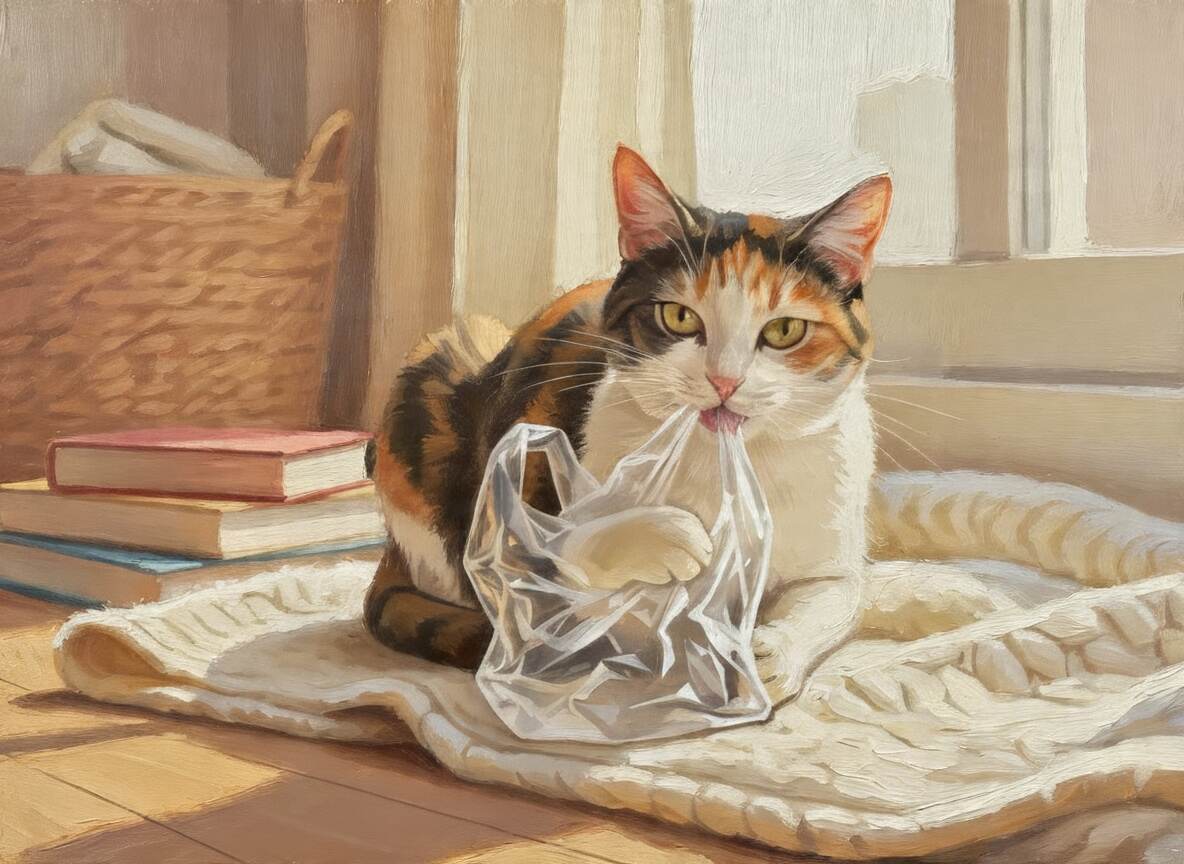
If you’ve ever caught your cat licking a plastic bag like it’s a gourmet snack, you’re not imagining it, and you’re not alone. Some cats don’t just chew plastic, they seek it out: grocery bags, bread bags, shrink wrap, mailers, the edge of a shower curtain, or the crinkly wrapper you thought you put safely out of reach.
It’s a strangely specific behavior, and it can be confusing because it looks half silly, half obsessive. The good news is that plastic-licking is common enough that vets and behaviorists see it regularly. The not-so-good news is that it can sometimes be a sign of stress, nausea, nutritional gaps, or compulsive behavior, and it can also become a safety issue if licking turns into chewing and swallowing.
This post breaks down the most likely reasons cats lick plastic, how to tell what’s going on in your cat’s case, and what to do to keep it from becoming dangerous.
First: licking plastic is different from eating plastic
A lot of cats start with licking. The texture, smell, and sound are stimulating. But some cats escalate into chewing, shredding, and swallowing. That’s where the risk increases, because swallowed plastic can cause choking, vomiting, GI irritation, or intestinal blockage.
So even if your cat “only licks,” it’s worth taking seriously, because the habit can grow.
Reason 1: the smell is genuinely interesting to your cat
Plastic bags and packaging often carry odors that are very real to a cat’s nose, even if you can’t smell anything.
Common scent triggers include:
- food residue (meat, bread, snacks, oils)
- adhesives (tape, labels, glue)
- manufacturing chemicals (some plastics have a distinct odor)
- household smells trapped in the plastic (laundry, perfume, cleaning products)
Cats explore with their mouths. Licking is one way they “inspect” something that smells compelling. If your cat only licks plastic that has been near food, this is a strong possibility.
Reason 2: the texture and crinkle are sensory stimulation
Some cats are sensory seekers. Plastic has a unique feel on the tongue, and the crinkle sound can be oddly rewarding. It’s similar to why some cats love chewing cardboard or licking certain fabrics.
This is especially common in:
- young cats with lots of energy
- indoor cats who need more enrichment
- cats who are naturally mouthy or playful
If your cat seems playful while doing it, and stops easily when redirected, it may be more about stimulation than distress.
Reason 3: stress or anxiety (self-soothing behavior)
Licking can be calming. Many animals use repetitive behaviors to self-regulate. For cats, that can look like over-grooming, pacing, wool-sucking, or yes, licking plastic.
Stress triggers can be subtle:
- a new schedule
- a new pet
- neighborhood cats outside
- a move or renovation
- conflict in a multi-cat home
- boredom and lack of routine
If the plastic-licking happens more when the house is busy, when you’re gone, at night, or after changes, stress may be a big driver.
Reason 4: boredom and under-stimulation
This is one of the most common “hidden” causes. A bored cat will invent hobbies. Plastic is accessible, interactive, and it reliably gets a reaction from humans.
If your cat licks plastic and you jump up to stop them, you may accidentally be making it more interesting. From your cat’s perspective, plastic licking is a button that makes the human move.
Clues boredom is involved:
- your cat does it when you’re busy
- it happens in the evening/night
- your cat has zoomies, mischief, or attention-seeking behaviors too
- it’s worse on days with less play
Reason 5: nausea or digestive discomfort
This one surprises people, but it matters. Some cats lick or chew non-food items when they feel nauseated or have GI discomfort. You might also see lip licking, swallowing, grass eating, or sniffing food and walking away.
Possible underlying issues can include:
- hairballs
- mild gastritis
- food intolerance
- parasites
- constipation
- inflammatory bowel issues (in some cats)
If plastic licking is new and paired with appetite changes, vomiting, diarrhea, weight loss, or “off” behavior, it’s worth a vet check.
Reason 6: pica or compulsive tendencies
Pica is the urge to eat non-food items. Some cats have a stronger drive toward oral behaviors, and plastic can become a target. Certain cats also develop compulsive habits, where the behavior becomes repetitive and hard to interrupt.
This is more likely if:
- your cat seems “locked in” while licking
- they seek plastic repeatedly throughout the day
- they get agitated if you stop them
- they also chew fabric, cords, or other objects
Compulsive patterns are not your cat being naughty. They’re often a combination of stress, temperament, and reinforcement.
Reason 7: learned behavior (it gets results)
If licking plastic reliably leads to attention, chasing, talking, or treats as a distraction, your cat may have learned it’s a powerful way to control the room.
This is why the response matters. If every plastic-licking episode turns into a big interaction, it can become a habit loop.
Is plastic licking dangerous?
It can be.
Licking itself is usually not an emergency, but risks include:
- chewing and swallowing pieces (blockage risk)
- choking on thin plastic
- exposure to chemicals (especially if the plastic has residue, cleaners, or adhesives)
- reinforcing anxiety habits if it’s stress-driven
If your cat is chewing or tearing plastic, treat it as a safety issue, not just a quirky habit.
When to call the vet
Book a vet visit sooner if:
- the behavior is sudden and intense
- your cat is vomiting, losing weight, or eating less
- you suspect your cat swallowed plastic
- your cat is constipated or straining in the litter box
- your cat seems distressed, restless, or unusually clingy
- the licking is paired with other pica behaviors (eating fabric, chewing cords)
And if your cat is actively gagging, vomiting repeatedly, lethargic, or has a painful belly, that’s urgent.
What to do (practical steps that actually help)
1) Remove access first (management matters)
This is the unglamorous part, but it’s the most effective:
- store bags in a closed cabinet
- keep shower curtains tucked up if that’s the target
- don’t leave packaging on counters
- use bins with lids
- be extra careful with stringy plastic (bread bags, shrink wrap)
You can’t train a behavior you can’t interrupt if the temptation is everywhere.
2) Replace the habit with better oral enrichment
Give your cat something safe to do with their mouth:
- lick mats (with a tiny smear of wet food)
- food puzzles
- treat balls
- crunchy dental treats (if appropriate)
- chew-safe cat toys
The goal is not just “stop licking plastic.” It’s “meet the need that plastic was meeting.”
3) Increase hunting-style play
A lot of plastic-lickers are under-stimulated. Try:
- 10–15 minutes of wand-toy play daily
- end with a small meal or treat
- rotate toys weekly
This “hunt, catch, eat, sleep” rhythm reduces restless habits in many cats.
4) If it’s stress-related, make the environment feel safer
- keep routine predictable
- add hiding spots and vertical space
- reduce conflict between pets (separate resources)
- consider pheromone diffusers (some cats respond well)
5) Don’t accidentally reward it
If your cat licks plastic and you immediately talk, chase, or offer treats, you may be reinforcing it.
Instead:
- calmly remove the plastic with minimal reaction
- redirect to an approved activity (toy, puzzle, lick mat)
- reward calm behavior later, not the plastic moment
Final thoughts
Cats lick plastic for reasons that usually make sense once you zoom out: interesting smells, sensory stimulation, boredom, stress, nausea, or a developing compulsive habit. The behavior can be harmless in mild cases, but it can also become risky if it turns into chewing and swallowing.
The best approach is a mix of management (remove access), enrichment (give better outlets), and curiosity (watch for stress or health clues). And if the behavior is sudden, intense, or paired with appetite or litter box changes, it’s worth getting your vet involved, just to be safe.