Why Does My Cat Lick Me?
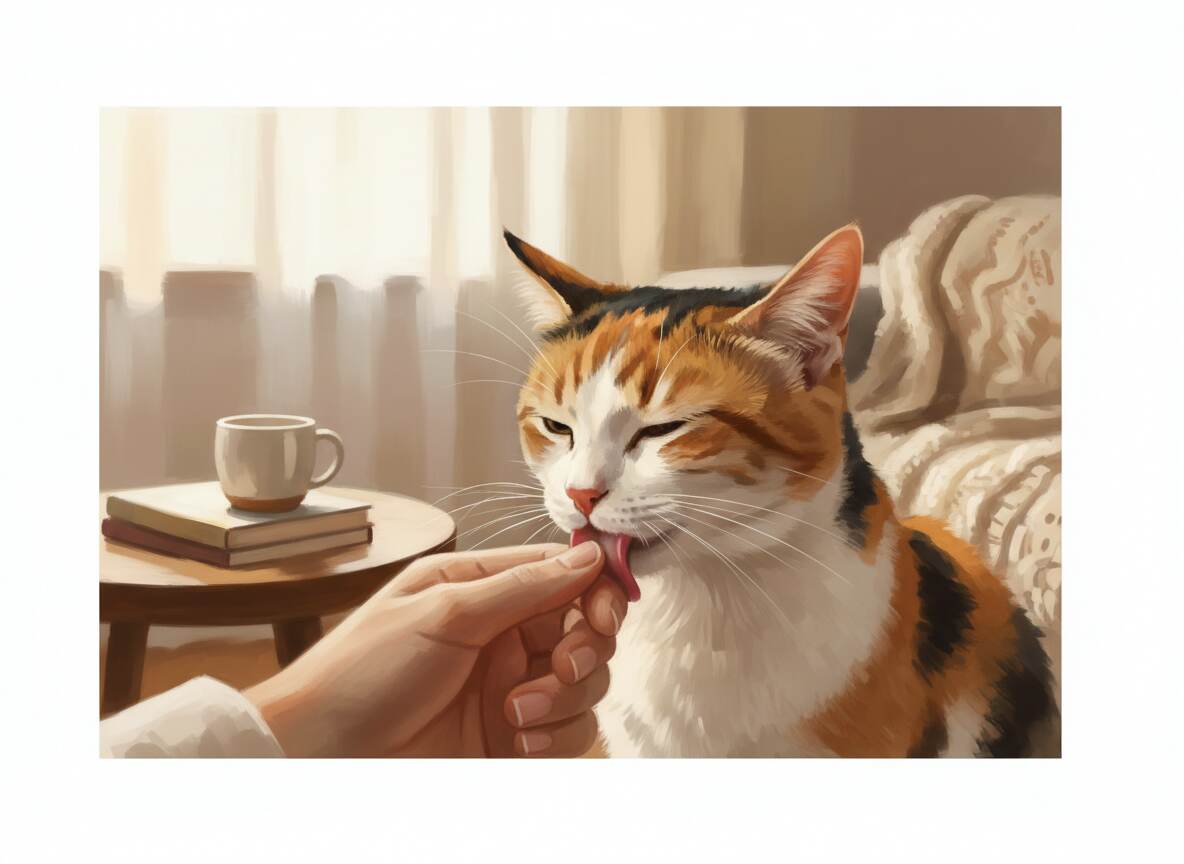
If your cat licks your hand, your arm, your face, or even your hair, it can feel sweet, confusing, a little weird, or sometimes slightly painful if their tongue catches you at the wrong angle. A lot of cat owners wonder what this behavior actually means. Is it affection? Grooming? Anxiety? A bad habit? Or is your cat trying to tell you something?
The short answer is that cats lick people for a few different reasons, and in many cases, it is completely normal. Licking can be a sign of affection, bonding, social grooming, comfort, routine, or even curiosity. Sometimes it is harmless and endearing. Other times, especially if it becomes sudden, intense, or obsessive, it can point to stress, overstimulation, or a medical or behavioral issue that deserves a closer look.
The most helpful way to think about it is this: licking is one of the ways cats interact with the world. They use it to clean, soothe, bond, explore, and communicate. So when your cat licks you, the behavior usually has meaning, even if that meaning is not always obvious right away.
Licking can be a form of affection
One of the most common reasons cats lick their owners is simple affection. Cats do not show love in exactly the same way dogs do, and they are often more subtle about it, but licking can absolutely be part of their social bonding behavior. A cat who licks you may be showing trust, comfort, and closeness.
This is especially true if the licking happens when your cat is already relaxed. Maybe they are curled up on your lap, purring beside you, kneading a blanket, or settling in for a nap. In those moments, licking often feels less like a random action and more like a quiet sign that your cat feels safe with you.
Not every affectionate cat licks, of course, but for some cats it is part of how they express connection.
Your cat may be grooming you like family
Cats groom each other as a social behavior. This is sometimes called allogrooming, and it is common between cats who are bonded. When cats groom one another, they are not just cleaning fur. They are reinforcing trust, familiarity, and group connection.
So when your cat licks you, they may be treating you as part of their social circle. In a very cat-like way, they may be grooming you because you belong to them, you are close to them, and you are part of their safe world.
This is one of the reasons licking can feel so personal. Your cat is not necessarily seeing you as another cat exactly, but they may be extending a cat social behavior toward you because of the bond you share.
Some cats lick because your skin tastes interesting
Sometimes the explanation is much less emotional and much more practical. Human skin can taste salty, warm, or interesting because of sweat, lotion, soap residue, food smells, or natural skin oils. Your cat may lick you simply because there is something on your skin that catches their attention.
This is especially likely if your cat licks after you exercise, after you put on lotion, after cooking, or when there is some trace of food or scent on your hands. Cats explore the world through smell and taste much more than many people realize, so a quick lick may be part investigation and part curiosity.
That does not make the behavior meaningless. It just means not every lick is a deep emotional message.
Licking can be soothing and self-comforting
For some cats, licking is calming. Grooming is a natural self-soothing behavior, and when a cat feels especially relaxed, sleepy, or emotionally settled, they may extend that behavior to you. In that sense, licking can happen because your cat feels content and safe enough to slip into a grooming rhythm.
This is why some cats lick during cuddly moments, especially when they are purring or kneading at the same time. The behavior may be part affection and part comfort. Your cat may not be making a big statement so much as falling into a soothing habit while they are close to someone they trust.
Kittens and early social experiences can shape the behavior
Some cats are simply more likely to lick than others, and early life experiences may play a role. Cats who were heavily groomed by their mother, closely bonded with littermates, or hand-raised with lots of human contact may be more likely to use licking as a social behavior later on.
Some cats also retain a more kitten-like style of attachment into adulthood. These cats may knead, suck on blankets, lick frequently, or seek a lot of close contact when they feel safe. That does not necessarily mean anything is wrong. It may just be part of their personality and early development.
Your cat may be asking for attention
Licking can also become a learned way to get your attention. If your cat licks you and you laugh, pet them, talk to them, move your hand, or otherwise respond, they may learn that licking is a reliable way to start an interaction. Over time, the behavior can become part communication and part habit.
This does not mean the cat is being manipulative in some dramatic way. It just means they have figured out that licking gets a response. Cats are very good at repeating behaviors that work.
If your cat tends to lick you when they want food, play, petting, or access to something, attention-seeking may be part of the picture.
Stress or anxiety can sometimes show up as extra licking
While licking is often normal, it can also become more frequent when a cat is stressed or anxious. Some cats groom themselves more when they are unsettled. Others redirect some of that licking toward their owners, blankets, or other objects.
If your cat has suddenly started licking you much more than usual, especially alongside clinginess, hiding, restlessness, overgrooming, appetite changes, or other behavior shifts, stress may be involved. Changes in the home, new pets, visitors, moving house, schedule changes, or conflict with other animals can all affect behavior.
In these cases, licking may be less about affection and more about self-regulation. Your cat may be trying to soothe themselves through a familiar repetitive action.
Sometimes licking turns into biting
A lot of owners notice that licking does not always stay gentle. Sometimes a cat licks for a while and then suddenly gives a small bite. This can feel confusing, but it is actually pretty common. In some cases, it is part of overstimulation. In others, it is just a cat-like shift in social behavior.
Cats do not always separate affection and correction the way humans do. A few licks followed by a light nip can happen during grooming-style interaction, especially if your cat gets carried away, becomes overstimulated, or decides they have had enough contact. It does not always mean aggression. It can simply mean the mood changed.
The context matters. A relaxed cat giving a soft warning nip is very different from a tense cat biting hard.
Why cats lick hair, faces, or strange body parts
Some cats become very focused on hair, foreheads, ears, or even eyebrows. This can seem especially odd, but it often comes back to grooming behavior, salt on the skin, scent, or texture. Hair can feel a bit like fur to a cat, and licking it may be their version of tidying you up.
Face licking can also happen because your scent is strongest there, or because your cat is already close to you while you are lying down. Some cats are simply very enthusiastic groomers and do not have much sense of personal boundaries.
It is sweet in theory, though maybe less sweet at 6 a.m. when a rough tongue hits your eyelid.
Is it normal if my cat licks me every day?
For many cats, yes. A cat who gives a few licks during cuddle time, while sitting on your lap, or as part of a familiar routine is usually doing something completely normal. If the behavior is gentle, predictable, and not escalating, it is often just part of your cat’s personality.
Some cats are lickers. Some are not. Just like some cats are lap cats and others prefer to sit nearby, licking can simply be one of those individual traits.
When licking may be too much
The behavior becomes more concerning when it feels compulsive, sudden, or hard for your cat to stop. If your cat licks you obsessively, seems agitated while doing it, switches between licking you and overgrooming themselves, or starts licking objects, fabric, or the air in an intense repetitive way, it may be time to look deeper.
Excessive licking can sometimes be linked to anxiety, skin discomfort, pain, nausea, neurological issues, or other medical or behavioral problems. A cat who suddenly becomes fixated on licking is different from a cat who has always given a few affectionate licks now and then.
This is especially important if the licking comes with hair loss, skin irritation, appetite changes, vomiting, hiding, vocalizing, or any other unusual behavior.
Could my cat be licking me because something is wrong?
Sometimes, yes, but usually not in a dramatic way. Most licking is harmless. Still, sudden behavior changes always deserve attention. If your cat has never been a licker and suddenly starts doing it constantly, or if the licking seems frantic, restless, or paired with other symptoms, it is worth considering stress or a health issue.
Cats can change behavior when they are uncomfortable, nauseated, itchy, anxious, or in pain. Because cats are subtle animals, small behavior changes can be meaningful. The licking itself may not tell you exactly what is wrong, but it can be part of a bigger pattern.
What should you do if your cat licks you a lot?
If the licking is gentle and you do not mind it, you may not need to do anything at all. In many homes, this is just one of those odd but affectionate cat habits that becomes part of daily life.
If you do want to reduce it, the best approach is calm redirection. Move your hand away gently, offer a toy or blanket, or shift your cat into another activity without scolding. Punishing the behavior can create confusion or stress, especially if your cat is licking out of affection or comfort.
If the licking seems stress-related, look at the bigger picture. Has anything changed recently? Is your cat getting enough play, rest, routine, and quiet space? Are there signs of tension with other pets? Is your cat showing any physical symptoms? The answer often lies in the context around the behavior.
When to talk to a vet
It is a good idea to talk to your vet if the licking is new, intense, obsessive, or paired with any other changes in behavior or health. That includes overgrooming, hair loss, skin problems, appetite changes, vomiting, litter box changes, restlessness, or signs that your cat seems uncomfortable.
You do not need to panic over a few affectionate licks. But if the behavior feels different, excessive, or part of a larger shift, it is worth checking in. Cats are very good at hiding problems, and sometimes unusual repetitive behavior is one of the few clues they give.
Final thoughts
If your cat licks you, the reason is often something fairly sweet and normal. Affection, social grooming, comfort, curiosity, habit, and attention-seeking are all common explanations. In many cases, your cat is simply interacting with you in one of the ways that feels natural to them.
At the same time, context matters. A few loving licks during cuddle time are very different from frantic, sudden, nonstop licking that comes with other changes. The behavior itself is not always the problem. What matters most is whether it fits your cat’s usual personality, routine, and overall health.
So if your cat licks you now and then, there is a good chance it is their odd little way of saying you are part of their world. And in cat language, that is actually a pretty big deal.