Why Does My Cat Follow Me Everywhere?
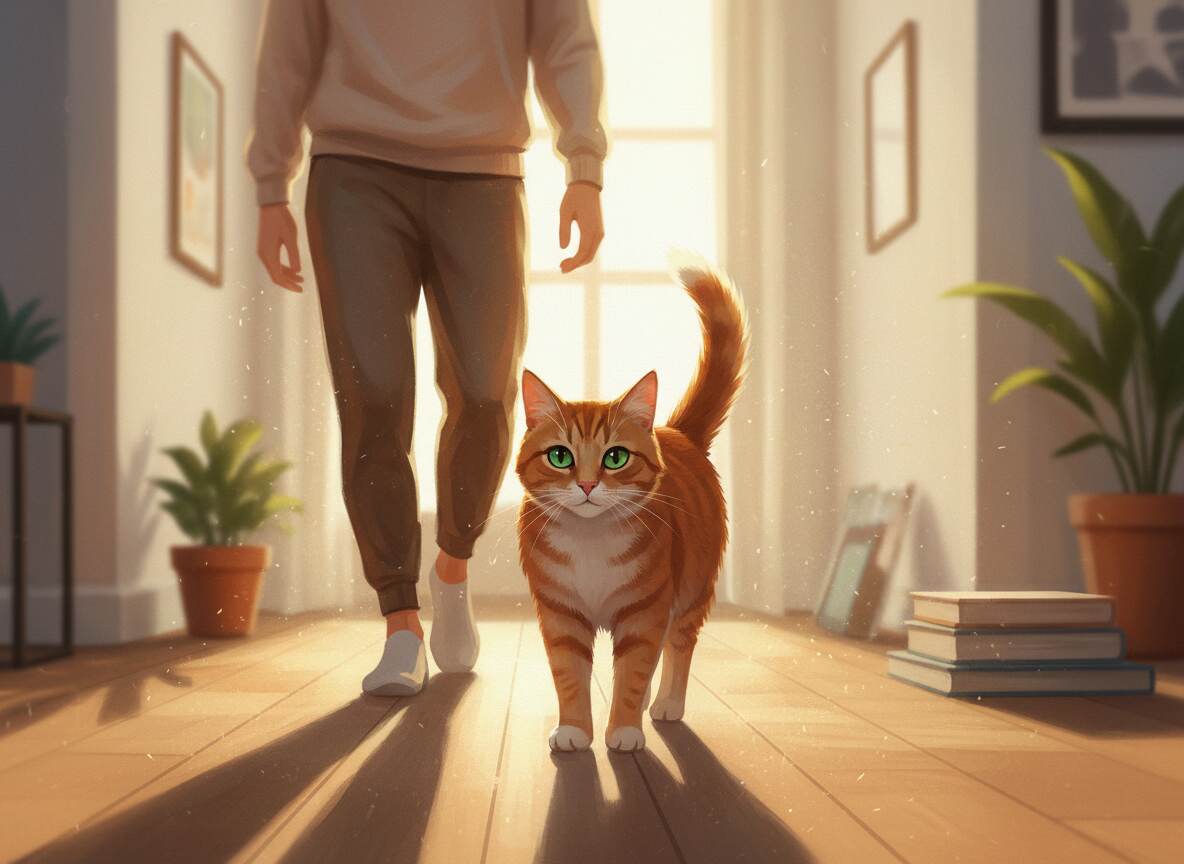
If your cat seems to appear every time you stand up, walk into the kitchen, head to the bathroom, or move from one room to another, you are not imagining it. Some cats really do follow their people everywhere. It can feel sweet, funny, clingy, or a little confusing, especially if the behavior is new. In most cases, it is completely normal. Cats are often more socially aware and routine-driven than people expect.
Your cat may simply feel attached to you
One of the most common reasons a cat follows a person around is attachment. Cats do form strong bonds with people, even if they show it in quieter ways than dogs. A cat that trails behind you may see you as a source of safety, comfort, predictability, and interest. They may like your voice, your habits, your scent, and the fact that being near you feels secure.
Some cats also choose a favorite person. That does not always mean they dislike everyone else. It often just means one person feeds them most often, plays with them more, has a calmer energy, or fits their comfort zone better.
Routine matters more than many owners realize
Cats are excellent observers of patterns. If you usually feed them after getting out of bed, give treats when you enter the kitchen, or sit on the couch at the same time every evening, your cat learns those rhythms quickly. Following you may be less about clinginess and more about anticipation. They are watching for what happens next.
This is why many cats become little shadows around meal times, treat routines, or bedtime. They are not being manipulative. They are responding to habits that have become meaningful in their day.
Curiosity plays a big role
Cats are naturally curious. When you move, you become interesting. A closed door, a rustling bag, running water, a drawer opening, or a trip into a room they do not usually access can all trigger that curiosity. Some cats follow because they want to inspect whatever you are doing. In their minds, your activity might mean food, play, a new object, or a change in the environment.
This is especially common in intelligent, active, or younger cats who need more stimulation. For them, following you is part social behavior and part entertainment.
Your cat may be bored or under-stimulated
A cat that does not have enough enrichment may start using you as the most exciting part of the day. If they lack climbing options, puzzle feeders, window views, toys that rotate, or regular play sessions, they may follow you simply because you are the main event.
This does not mean you are doing anything wrong. Indoor cats especially need more mental stimulation than many people realize. A cat that follows you from room to room may be asking for interaction, novelty, or a chance to burn energy.
Hunger and food association are common reasons
Sometimes the answer is very simple. Your cat follows you because you are the food person. Even if they are not starving, they may have learned that your movement predicts meals, snacks, wet food, or treats. Cats are very good at connecting people with resources.
If the following happens mostly in the kitchen, near feeding times, or when you open certain cabinets, food association is probably part of the picture.
Some cats like supervision and social proximity
Not every cat follows because they want active attention. Some just prefer to be nearby. They may sit in the same room, watch you fold laundry, wait outside the shower, or settle near your desk while you work. This kind of quiet companionship is common in bonded cats. They are not necessarily asking for petting every second. They just want to keep you in view.
For many cats, being near their person is reassuring. It lets them relax while still staying aware of what is happening around them.
Personality makes a difference
Some cats are naturally more independent, while others are more social, vocal, and people-focused. Breed tendencies can play a role too. Siamese, Burmese, Ragdolls, and some other breeds are often described as especially people-oriented, though every cat is still an individual.
A confident, affectionate cat may follow you because that is simply who they are. A shy cat may follow only the person they trust most. Personality shapes the behavior just as much as routine does.
Age can change how clingy a cat seems
Kittens often follow people out of curiosity, playfulness, and developing attachment. Adult cats may do it because of routine, affection, or habit. Senior cats can become more attached for different reasons, including reduced confidence, sensory changes, or a stronger need for reassurance.
If an older cat suddenly starts following you much more than usual, it is worth paying closer attention. Sometimes this is harmless, but sudden behavior changes in senior cats can also be linked to discomfort, confusion, vision or hearing decline, or other health changes.
Stress and anxiety can increase following behavior
Cats often become more clingy when something in their world feels off. A move, new pet, new baby, visitors, loud construction, schedule changes, or tension in the home can all affect behavior. Some cats hide when stressed. Others become unusually attached and want constant proximity.
If your cat has started following you more after a change in the home, they may be using your presence as a source of stability. In that case, the behavior is not random. It may be their way of coping.
Medical issues can sometimes be part of the reason
A cat that suddenly becomes unusually clingy, vocal, restless, or needy should not always be brushed off as extra affection. Sometimes cats follow their owners more when they are not feeling well. Pain, nausea, cognitive changes, high blood pressure, thyroid issues, or other medical problems can affect behavior.
This is especially important if the following is new and comes with other changes like appetite shifts, weight loss, hiding, litter box issues, confusion, nighttime restlessness, or unusual vocalizing. In those cases, a vet check is the safest next step.
Why cats follow people into the bathroom
This one is so common it almost deserves its own category. Bathrooms are full of cat intrigue: closed doors, cool floors, dripping faucets, unusual routines, and a captive human who is sitting still for once. Some cats also dislike barriers and want access to every part of their territory. If you close the door, that can make the room even more interesting.
For some cats, bathroom following is also about predictability. They know where you are, they know you will be there for a minute, and they may see it as a good chance for attention.
When it is normal and when it is not
Following behavior is usually normal when your cat seems relaxed, healthy, and otherwise like themselves. A cat who follows you, naps nearby, asks for food, or watches what you are doing is often just being social in a very cat-like way.
It becomes more concerning when the behavior is sudden, intense, or paired with other changes. If your cat seems distressed when they cannot reach you, cries constantly, paces, stops eating, hides between episodes of clinginess, or seems confused, that is different from ordinary attachment.
How to respond without encouraging unhealthy dependence
If your cat follows you because they enjoy your company, there is no need to stop it. In many homes, this is just part of life with a bonded cat. What matters is making sure the behavior comes from comfort and normal social connection, not stress or unmet needs.
A good response is to support your cat's emotional and mental health overall. Give them regular play, predictable feeding times, cozy resting spots, vertical space, scratching areas, and some independent enrichment. That way, your presence stays important without becoming their only source of stimulation.
If your cat seems overly dependent, try adding more structured play, food puzzles, window perches, and short positive activities they can enjoy without you. The goal is not to make them distant. It is to help them feel secure and fulfilled.
A clingy cat is not always a spoiled cat
A lot of owners worry they have somehow created the behavior by giving too much attention. Usually that is not the right way to think about it. Cats are individuals with social needs, habits, and emotional patterns. A cat who follows you may be affectionate, curious, hungry, bored, stressed, or simply attached to your routine.
The real question is not whether the behavior is annoying or flattering. It is whether it fits the rest of your cat's behavior and health. If it does, it is probably just one of the many ways your cat chooses to be close to you.
Final thoughts
If your cat follows you everywhere, the reason is often a mix of affection, habit, curiosity, and comfort. Cats may act independent, but many of them genuinely like being near their people. In a lot of cases, being followed from room to room is not a problem at all. It is a quiet little sign that your cat sees you as part of their safe world.
Still, sudden clinginess should always be taken seriously, especially if something else feels off. When behavior changes come out of nowhere, it is worth looking at stress, routine changes, and possible health issues. A cat shadow can be adorable, but it can also be a clue. Paying attention to the full picture matters most.