Why Does My Cat Chew Phone Cases?
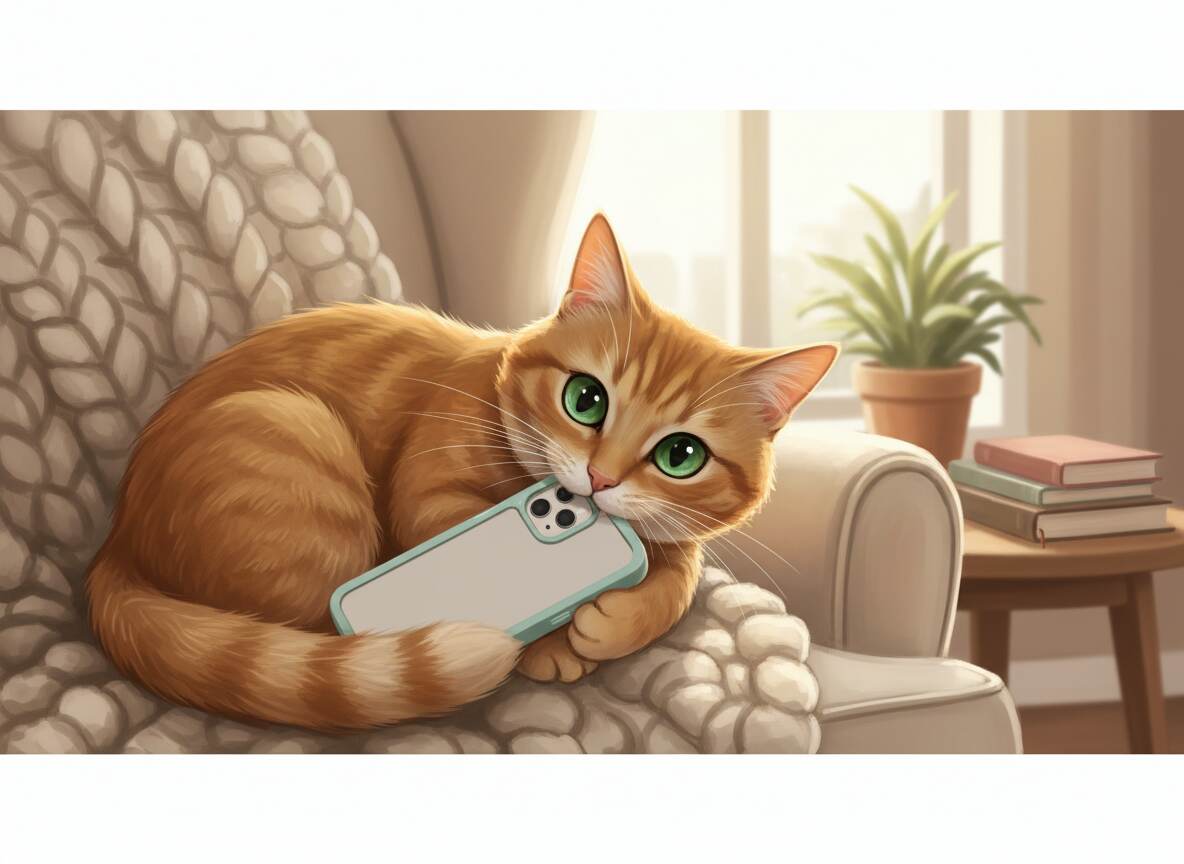
If your cat is chewing your phone case, you’re not alone, and you’re not crazy for feeling worried. It’s one of those modern, oddly specific behaviors that can look like pure mischief, but it usually has a reason behind it. Cats chew phone cases for the same core reasons they chew a lot of “human stuff”: texture, smell, stress relief, boredom, attention, teething (in young cats), or a pica-style urge to mouth non-food items.
Phone cases are especially tempting because they’re handled constantly, they smell like you, and many are made of materials that feel satisfying to bite: silicone, rubber, soft plastic, leather, or textured TPU. Some cats treat that texture like a chew toy. Others use it as a self-soothing habit. And some are genuinely at risk of swallowing pieces.
This post will help you figure out why it’s happening, what’s normal, what’s not, and how to stop it without turning it into a daily chase game.
First: is chewing a phone case dangerous?
It can be.
Main risks include:
- swallowing small pieces of silicone/plastic (choking or intestinal blockage)
- exposure to chemicals (dyes, coatings, adhesives, grime)
- tooth damage (rare, but possible with hard cases)
- reinforcing compulsive chewing if it’s stress-driven
If your cat is leaving tooth marks but not removing chunks, the risk is lower, but it’s still worth addressing early. If your cat is tearing pieces off, treat it as a safety issue.
Signs your cat may have swallowed case material
Call your vet promptly if you notice:
- repeated vomiting or retching
- refusing food or eating much less
- lethargy, hiding, or “not themselves”
- constipation, straining, or no stool
- diarrhea (sometimes)
- drooling, gagging, pawing at the mouth
- belly pain (hunched posture, tense abdomen)
If you saw your cat swallow a piece, don’t wait for symptoms. Ask your vet what to do next.
Why phone cases are so chewable (the big reasons)
1) Your phone case smells like you (and that’s the point)
Cats are scent-driven. Your phone case is basically a concentrated “you” object: skin oils, hand lotion, shampoo residue, sweat salts, food smells, whatever you touched today.
Some cats chew it because it’s comforting and familiar. It can be a bonding behavior in a weird form: not “I want to destroy your stuff,” but “this smells like my person.”
If your cat targets your phone specifically (not random plastic), scent attachment is a strong possibility.
2) The texture hits the “chew sweet spot”
Silicone and rubbery cases are especially satisfying because they have give. They compress under the teeth, spring back, and create a rewarding mouth-feel. For cats who like oral stimulation, it’s basically irresistible.
Cats that also chew:
- plastic bags
- cords
- shoe laces
- hoodie strings
- cardboard
- certain fabrics
…often love phone cases too.
3) Boredom: chewing is something to do
Indoor cats, especially young ones, can get under-stimulated. Chewing becomes a self-made activity. It’s sensory, it’s interactive, and it often gets a reaction from you.
Clues boredom is involved:
- chewing happens when you’re busy (working, scrolling, on calls)
- it’s worse in the evening
- your cat also knocks things over, zooms, or demands play
- it improves after a good play session
4) Attention-seeking: it reliably makes you react
If your cat has learned that chewing your phone case makes you:
- look at them
- talk to them
- chase them
- grab the phone
- engage in a tug-of-war moment
…then chewing becomes a very effective “summon the human” behavior.
Cats don’t always care whether the attention is positive. If the goal is interaction, even “No! Stop!” can be rewarding.
5) Stress or anxiety: chewing as self-soothing
Repetitive chewing can be calming. Some cats over-groom when stressed. Others chew.
Stress triggers can be subtle:
- schedule changes
- visitors
- moving house
- renovations
- new pet/baby
- conflict with another cat
- outdoor cats visible through windows
If the chewing increases during change, at night, or when your cat seems restless, stress may be part of the picture.
6) Teething (kittens and young cats)
If your cat is under a year old, chewing can be partly developmental. Kittens explore with their mouths and often go through phases where they chew more intensely.
Teething isn’t an excuse to allow unsafe chewing, but it explains why the urge can be strong in younger cats.
7) Pica tendencies or nausea (less obvious, but important)
If your cat chews non-food items frequently, especially if it’s escalating, consider pica patterns. Sometimes pica is behavioral. Sometimes it’s linked to underlying issues like nausea, GI discomfort, or nutritional imbalances.
This is more likely if you also notice:
- licking/chewing plastic
- eating fabric/string
- frequent vomiting or hairballs
- appetite changes
- weight loss
- litter box changes
If chewing is new and intense, a vet check is smart.
How to tell which reason fits your cat (fast checklist)
If it’s mostly boredom
- happens when you’re busy
- improves after play
- your cat is otherwise healthy and energetic
- it’s part of a “mischief package” (knocking things over, zoomies)
If it’s mostly attention
- your cat watches you while chewing
- chewing stops when you engage
- it happens when you’re focused on your phone (very common)
If it’s mostly stress
- started after a change
- happens at night or during household chaos
- paired with over-grooming, hiding, clinginess, or tension with other pets
If it may be medical/pica
- chewing is intense and persistent
- your cat tries to swallow pieces
- paired with vomiting, appetite change, weight loss, or litter box issues
What to do (practical, realistic steps)
Step 1: management: make chewing harder to practice
You can’t “train” a behavior your cat rehearses all day.
- don’t leave your phone on the bed/couch edge where your cat can grab it
- store it face-down or in a drawer when not in use
- use a harder case material temporarily (less satisfying than silicone)
- consider a case with minimal chewable edges (no soft corners)
This isn’t the whole solution, but it stops the habit from strengthening.
Step 2: replace the chewing need with safer oral outlets
If your cat wants mouth stimulation, give them something appropriate:
- chew-safe cat toys designed for biting
- silvervine sticks (many cats love these)
- dental toys (cat-safe, not dog-grade hard)
- treat puzzles and lick mats (oral + mental stimulation)
The goal is not just “stop chewing phone case.” It’s “give your cat a better job.”
Step 3: add daily hunting-style play (this helps more than people expect)
A lot of chewing is unmet energy.
Try:
- 10–15 minutes of wand-toy play daily
- let your cat stalk and “catch”
- end with a small meal or treat
This hunt-catch-eat rhythm reduces restless chewing in many cats.
Step 4: change the attention pattern
If chewing is a “get you to look up” trick, you want to flip the script.
- don’t react dramatically
- calmly remove the phone
- redirect to a toy or puzzle
- then give attention when your cat is calm (not mid-chew)
This teaches: calm behavior gets interaction, chewing doesn’t start the party.
Step 5: if stress is involved, reduce triggers and increase security
- keep routine predictable
- add vertical space and hiding spots
- spread resources in multi-cat homes (litter boxes, food, water)
- consider pheromone diffusers if your cat responds well
Step 6: vet check if it’s new, escalating, or paired with symptoms
If your cat is suddenly chewing intensely, swallowing pieces, vomiting, losing weight, or acting off, involve your vet. It’s better to rule out nausea, dental pain, or other issues early.
What not to do
- Don’t punish your cat. It increases stress and can worsen compulsive habits.
- Don’t use bitter sprays without checking cat safety (some aren’t meant for cats, and some cats will lick more).
- Don’t turn it into tug-of-war. That can make it a game.
- Don’t assume it’s “just teething” if your kitten is swallowing pieces.
Final thoughts
Cats chew phone cases because they’re sensory gold: soft texture, strong human scent, easy access, and guaranteed attention. For many cats it’s boredom or habit. For some it’s stress relief. And for a smaller number, it’s part of a pica pattern or a medical issue that deserves a closer look.
The best approach is a mix of management (reduce access), replacement (safe chewing outlets), enrichment (daily play), and calm consistency (don’t reward the chew moment). And if there’s any chance your cat is swallowing pieces, treat it as urgent.